
Red carpet transformations and Instagram-worthy hair moments make it tempting to recreate those stunning shades at home. But here’s the question that stops most people: can you actually achieve celebrity hair colour without damage? The short answer is yes, when you know the right techniques and use formulas designed to protect your strands.
The secret behind A-list colour isn’t always an expensive salon visit. Many celebrities and their stylists rely on gentle formulations and protective technologies that you can now access from your own bathroom. Plex-enriched dyes, proper preparation, and smart aftercare make all the difference between hair that looks healthy and hair that actually is healthy.
At Smart Beauty, we’ve built our entire range around this principle. Our vegan, cruelty-free hair dyes are free from PPD, ammonia, and resorcinol, the harsh chemicals that typically cause damage and irritation. Combined with plex technology that strengthens hair during the colouring process, you get vibrant, salon-quality results without sacrificing your hair’s integrity.
Whether you’re after a subtle balayage, a bold fashion shade, or that exact copper tone your favourite celebrity just debuted, these nine tips will help you colour like a pro while keeping your hair soft, shiny, and strong.
1. Start with a gentler Smart Beauty dye kit
The first step to achieving celebrity hair colour without damage begins before you even open a box. Professional colourists select formulas based on hair condition, not just the desired shade, and you should do the same. Smart Beauty’s plex-enriched dye kits contain strengthening technology that works during the colouring process, protecting your hair while the colour develops. This approach mirrors what stylists use in high-end salons, where protecting the hair is just as important as achieving the right tone.
What to do at home
Choose a Smart Beauty kit that matches your current hair level and desired result. If you have virgin hair (never coloured), you’ll get the truest colour payoff with less processing time. For previously coloured hair, consider whether you’re going darker, lighter, or similar in depth. Darker shades typically require less lifting and cause minimal stress to your hair structure. When selecting from Smart Beauty’s range, look for formulas marked as demi-permanent or plex-enriched if your hair has been chemically treated before. These options deposit colour without aggressive lifting agents that strip your hair’s natural proteins.
Always read the kit instructions completely before mixing, as timing and application methods vary between colour types.
Why it keeps hair healthier
Smart Beauty’s formulas exclude PPD, ammonia, and resorcinol, the three ingredients most responsible for hair damage and scalp irritation in traditional dyes. The plex technology actively bonds broken protein chains while the colour molecules penetrate your hair shaft. This means you’re rebuilding structure at the same time you’re adding pigment. Traditional box dyes often use high concentrations of harsh alkalines to force open the cuticle, which leaves hair porous and fragile. Smart Beauty’s gentler pH levels achieve colour deposit without that aggressive attack on your hair’s protective outer layer.
Mistakes that cause damage
Many people choose their colour based solely on the box photo, ignoring their starting level and hair history. Going too many shades lighter in one application forces you to use stronger developers that break down hair proteins. Another common error is assuming all box dyes are the same and picking cheap alternatives that lack protective ingredients. These budget options might achieve colour, but they leave your hair brittle and dull because they don’t include conditioning agents or bond-building technology. Skipping a strand test is the third major mistake, as it prevents you from understanding how your specific hair will react to the formula.
2. Diagnose your hair like a colourist would
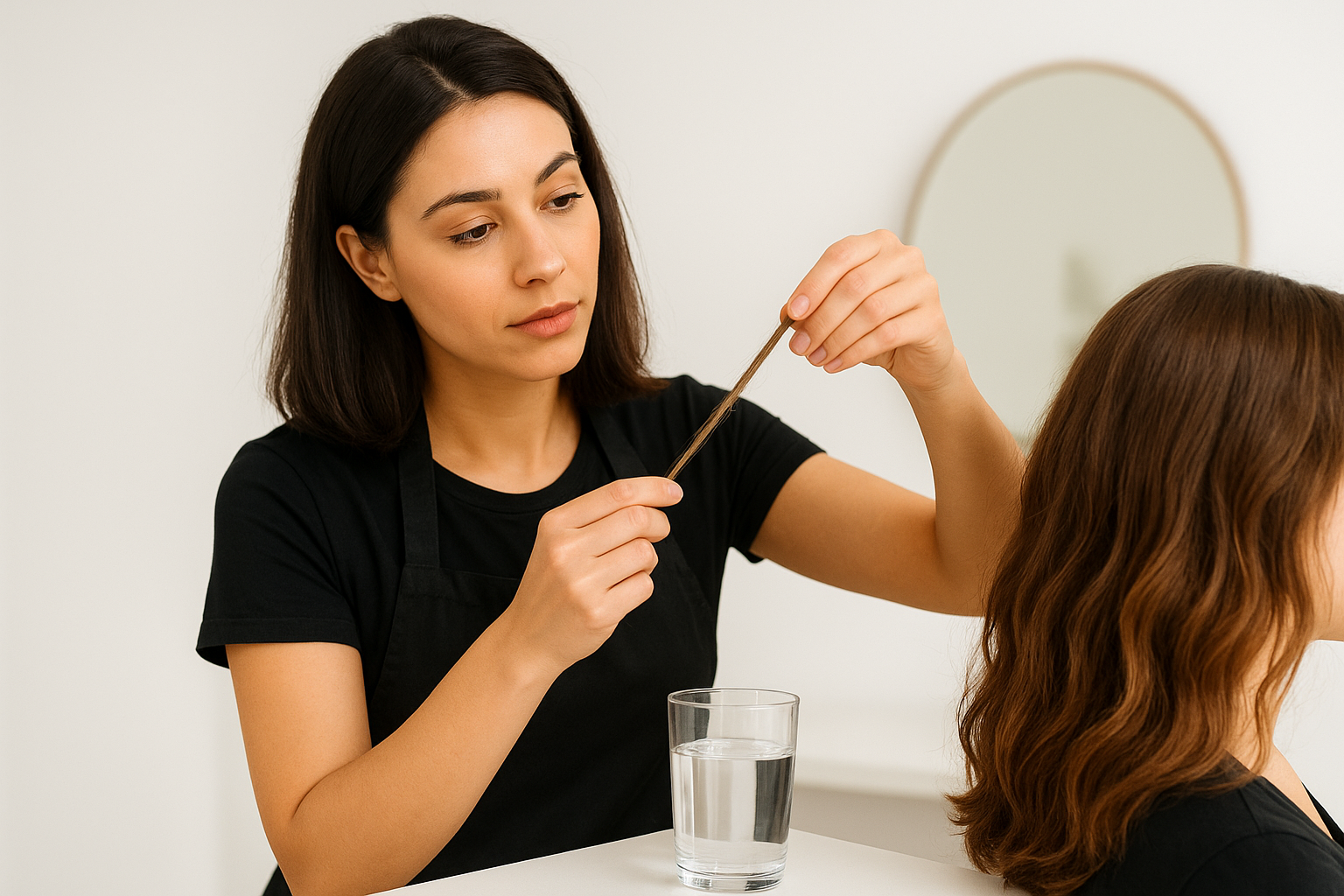
Professional colourists spend their first consultation assessing hair condition, not just discussing colour choices. This diagnostic step separates successful transformations from damaged disasters. Before you apply any colour, you need to evaluate your hair’s porosity, elasticity, and previous chemical history. This assessment tells you which formulas will work best and which techniques to avoid entirely.
What to do at home
Pull a single strand of hair and hold it taut between your fingers. Gently tug to test elasticity and strength. Healthy hair stretches slightly before breaking, while damaged hair snaps immediately. Next, check porosity by placing a clean strand in a glass of water. Hair that sinks quickly has high porosity (damaged cuticle), while hair that floats has low porosity (sealed cuticle). Finally, examine your ends under good lighting for split ends, breakage, or transparency, which indicate protein loss.
Hair diagnosis determines whether you can safely lift colour or should stick to depositing shades instead.
Why it keeps hair healthier
This assessment prevents you from over-processing already compromised hair. If your strands show high porosity or low elasticity, you know to choose gentler formulas like Smart Beauty’s semi-permanent range. Colourists use this exact method to decide whether hair can handle bleach or needs bond-building treatments first. Understanding your starting point means you select the right developer strength and processing time.
Mistakes that cause damage
Skipping the diagnosis leads people to apply lightening formulas to already damaged hair, which causes breakage and matting. Many assume their hair is healthy simply because it looks shiny, ignoring underlying structural weakness. Another error is misreading porosity, treating high-porosity hair like it needs more processing when it actually needs less.
3. Go lighter gradually, not in one session
Jumping from dark brown to platinum blonde in a single afternoon might work for celebrities with entire salon teams, but it’s a recipe for disaster at home. The secret to achieving celebrity hair colour without damage when going lighter lies in patience. Professional colourists typically space lightening sessions two to four weeks apart, allowing your hair to recover its strength between applications. This staged approach prevents the brittleness and breakage that comes from aggressive, single-session lightening.
What to do at home
Plan your colour journey in two or three stages rather than one drastic jump. For each session, aim to lift your hair two to three shades lighter using Smart Beauty’s appropriate developer strength. Start with a lower volume developer (10 or 20 vol) for the first application, then assess your results before proceeding. Between sessions, use deep conditioning treatments and protein masks to rebuild any compromised structure. Keep a colour journal noting which products you used, processing times, and your hair’s condition after each application.
Gradual lightening gives your hair time to maintain its structural integrity while still reaching your dream shade.
Why it keeps hair healthier
Your hair’s protein bonds can only withstand limited stress before they permanently break. Gradual lifting allows these bonds to partially recover between sessions, maintaining elasticity and strength. Each lightening process removes melanin and protein simultaneously, so spacing your applications lets you replenish lost proteins through conditioning treatments.
Mistakes that cause damage
Attempting to lift more than three shades in one session forces you to use high-volume developers that destroy protein structure. Many people also make the error of processing colour too frequently, not allowing the recommended recovery time between applications.
4. Use balayage-style painting for softer lift
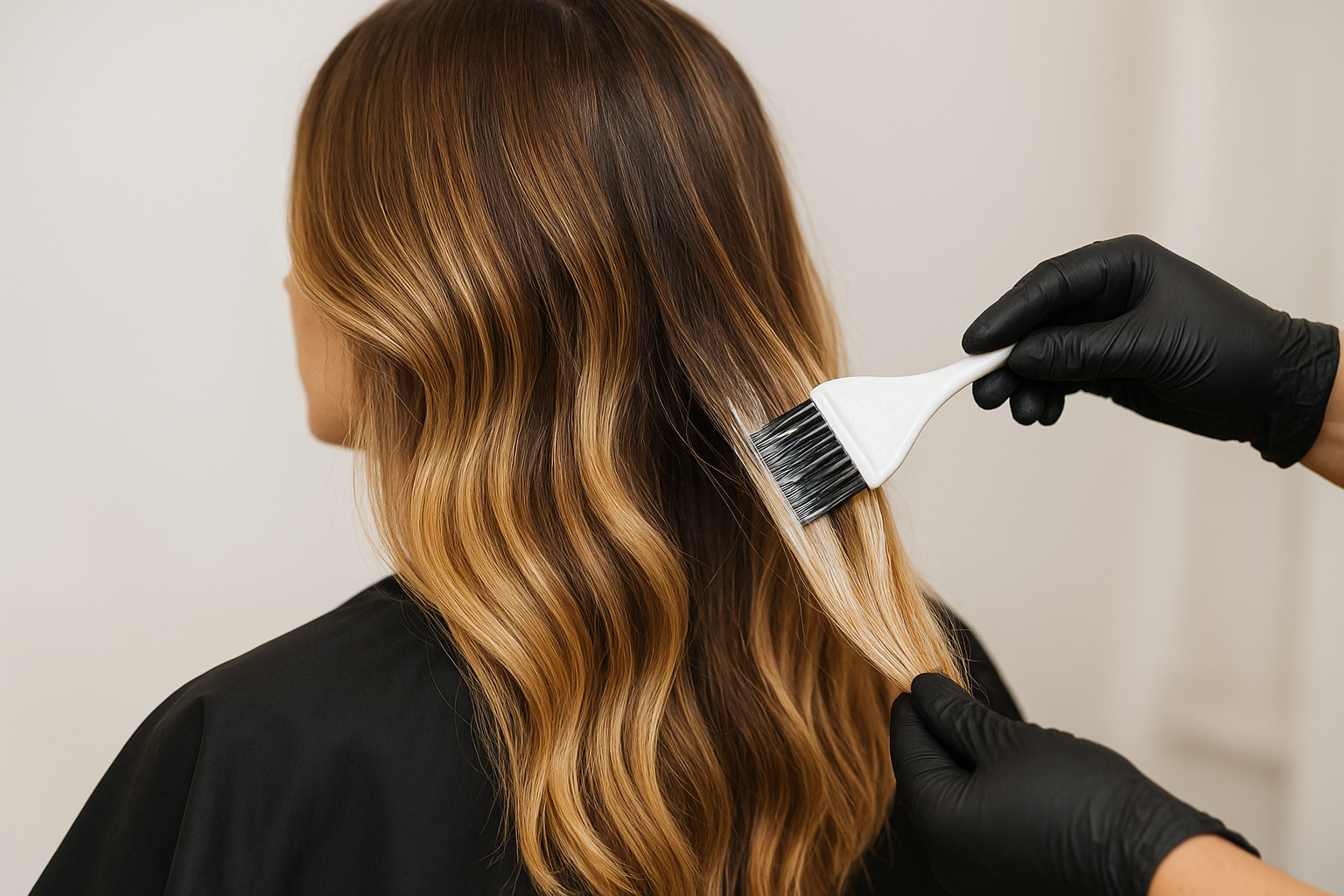
Balayage isn’t just a salon technique reserved for expensive appointments. This hand-painting method allows you to lighten specific sections of your hair while leaving your roots and underlayers darker, which significantly reduces overall damage. Unlike traditional foil highlights that process every strand uniformly, balayage gives you dimensional colour similar to what you see on celebrities like Jennifer Aniston or Blake Lively. The technique distributes lightening products strategically, meaning less of your hair undergoes chemical processing.
What to do at home
Section your hair into four quadrants and work on small pieces at a time. Using a tint brush, apply your Smart Beauty lightener to mid-lengths and ends only, painting upward strokes that start about 5 centimetres from your roots. Focus your application on the pieces that naturally catch light, the front sections framing your face and the outer layers of your hair. Leave thicker sections near your crown and nape untouched, as these areas stay hidden anyway. Process the colour according to your kit instructions, checking every 10 minutes to monitor lift.
Hand-painting lightener gives you control over exactly which strands get lifted, preventing unnecessary chemical exposure.
Why it keeps hair healthier
This targeted approach means 60-70% of your hair remains untouched by lightening chemicals. Your roots retain their natural strength, and the darker underlayers provide structural support for the lightened pieces. Balayage also eliminates harsh demarcation lines, so regrowth looks intentional rather than neglected.
Mistakes that cause damage
Applying lightener too close to your scalp defeats the protective purpose of balayage. Many people also oversaturate their hair, using excessive product that drips and spreads beyond intended sections.
5. Choose demi or semi colour when you can
Permanent colour isn’t always necessary to achieve celebrity hair colour without damage. Many of the glossy, vibrant shades you see on television and social media come from demi-permanent or semi-permanent formulas that deposit colour without harsh lifting agents. These gentler alternatives coat your hair shaft rather than forcibly opening the cuticle, which preserves your hair’s natural strength and moisture. Smart Beauty offers both options across their range, giving you the flexibility to choose formulas that match your commitment level and hair condition.
What to do at home
Select Smart Beauty’s demi-permanent range when you want to go darker, add richness to your existing shade, or refresh faded colour. These formulas last through 20 to 30 washes and gradually fade without harsh regrowth lines. Choose semi-permanent options for fashion shades, toning, or experimenting with colours you’re not ready to commit to permanently. Semi-permanent dyes work best on pre-lightened or naturally light hair, as they deposit pigment without lifting your base shade.
Demi and semi formulas eliminate the alkaline damage that comes from opening your hair cuticle with permanent dye.
Why it keeps hair healthier
These formulas use lower pH levels that don’t strip your hair’s protective lipid layer. Your cuticle remains relatively closed, maintaining moisture retention and elasticity. Since they don’t contain strong lifting agents, your protein bonds stay intact.
Mistakes that cause damage
Expecting dramatic lightening from these formulas leads to disappointment and repeated applications that build up and dull your hair. Using them on very dark hair without pre-lightening won’t give you the vibrant results shown on packaging.
6. Use gloss and toner for red carpet shine
Glosses and toners deliver the polished finish that separates amateur colour from professional results. These products neutralize unwanted tones and add reflective shine without additional lifting or damage. Celebrities rely on toners to perfect their colour between appointments, and you can achieve the same luminous effect at home. Smart Beauty’s toner range works on both freshly coloured and faded hair, correcting brassiness while depositing conditioning agents that smooth your cuticle.
What to do at home
Apply toner to clean, damp hair within 48 hours of colouring for maximum correction, or use it weekly to maintain your shade between colour sessions. Choose purple toners for yellow undertones in blonde hair, blue toners for orange in lightened brown hair, and green toners for red tones. Mix your Smart Beauty toner according to kit instructions and apply it evenly through your mid-lengths and ends first, then work toward your roots. Process for the recommended time only, checking every few minutes to prevent over-toning.
Toners add shine and correct colour without any lifting action, making them completely safe for regular use.
Why it keeps hair healthier
Toners use deposit-only formulas that don’t require cuticle-opening chemicals. They smooth your hair’s outer layer while adding pigment, which increases light reflection and shine. The conditioning agents in quality toners fill microscopic gaps in your cuticle.
Mistakes that cause damage
Leaving toner on too long can cause muddy, grey undertones that require corrective colouring. Using toners on extremely damaged hair without addressing the underlying breakage wastes product and makes hair appear dull.
7. Prep and protect before you apply colour
Professional colourists never apply dye to unprepared hair. They treat, cleanse, and protect your strands days before any chemical process begins. This pre-colour preparation determines whether your results look salon-fresh or home-disaster. Smart Beauty’s kits work best when you follow proper prep protocols that strengthen your hair and protect vulnerable areas from unnecessary chemical exposure.
What to do at home
Stop using hot tools and harsh shampoos three days before colouring. Wash your hair 24 hours before application with a clarifying shampoo to remove product buildup, but skip conditioner so colour can penetrate properly. Apply a protein treatment 48 hours before dyeing if your hair shows signs of damage or previous chemical processing. On colour day, protect your hairline, ears, and neck with petroleum jelly or barrier cream before you begin mixing your Smart Beauty formula. Section your hair into four quadrants using clips, which ensures even application and prevents missed spots.
Proper preparation creates the foundation for colour that develops evenly and lasts longer without compromising hair health.
Why it keeps hair healthier
Pre-treating with protein fills microscopic gaps in damaged hair, creating a more uniform surface for colour deposit. Clarifying removes mineral deposits and styling products that can interfere with colour penetration, preventing uneven results that tempt you to reapply colour unnecessarily. Barrier cream protects your skin from irritation and prevents you from rushing through application due to discomfort.
Mistakes that cause damage
Colouring freshly washed hair (same day) strips away protective sebum that naturally shields your scalp. Skipping protein treatments on previously bleached or highlighted hair leads to uneven porosity and patchy colour absorption.
8. Control timing, heat, and rinsing
Professional colourists monitor three critical factors during every application: processing time, ambient temperature, and water temperature. These variables determine whether your colour develops evenly or causes unnecessary damage. Smart Beauty’s formulas include specific timing guidelines based on developer strength and desired results, but your environment and technique play equally important roles in achieving celebrity hair colour without damage.
What to do at home
Set a timer the moment you finish applying your Smart Beauty colour, and check your hair every 10 minutes during processing. Room temperature should stay between 20-24°C, as heat accelerates chemical reactions and can cause over-processing. Keep your hair away from direct sunlight, radiators, and hairdryers during development. When your timer signals completion, rinse with lukewarm water until it runs clear, then drop to cool water for your final rinse. This temperature shift seals your cuticle and locks in colour molecules.
Precise timing and temperature control prevent the over-processing that leads to breakage and uneven colour results.
Why it keeps hair healthier
Sticking to recommended processing times prevents chemical over-exposure that breaks down protein bonds. Cool water rinsing closes your cuticle, trapping colour molecules inside while preventing moisture loss. Proper rinsing removes all chemical residue that would otherwise continue processing your hair after you think you’ve finished.
Mistakes that cause damage
Leaving colour on longer than instructed doesn’t create better results, it creates damaged hair. Using hot water to rinse opens your cuticle and allows freshly deposited colour to wash away, forcing you to recolour sooner.
9. Maintain shine with bond care and aftercare
The moment you rinse out your colour marks the beginning of your aftercare routine, not the end of your colour journey. Celebrities maintain their glossy, healthy-looking hair through dedicated bond-building treatments and protective styling habits that prevent colour fade and structural damage. Smart Beauty’s plex-enriched formulas give you a head start, but your daily habits determine whether your colour stays vibrant or dulls within weeks.
What to do at home
Switch to sulphate-free shampoo immediately after colouring, as sulphates strip colour molecules and natural oils. Wash your hair only two to three times weekly with cool or lukewarm water, which keeps your cuticle sealed. Apply a bond-building treatment or deep conditioner once weekly, focusing on your mid-lengths and ends where colour processing concentrates damage. Sleep on silk or satin pillowcases to reduce friction that roughs up your cuticle and dulls shine. Limit heat styling to once weekly, and always apply heat protectant spray before using hot tools.
Weekly bond treatments rebuild the protein structure that colouring weakens, keeping your hair strong and shiny between colour sessions.
Why it keeps hair healthier
Sulphate-free formulas clean without stripping the conditioning agents that Smart Beauty’s dyes deposit. Bond treatments continue the repair work that plex technology started during colouring, filling gaps in your protein matrix. Reduced washing and heat exposure prevent premature colour fade, which eliminates the temptation to recolour too frequently.
Mistakes that cause damage
Using clarifying shampoos weekly strips your colour and natural oils, leaving hair dull and porous. Skipping heat protectant allows temperatures above 180°C to melt your cuticle and evaporate moisture.
Next steps
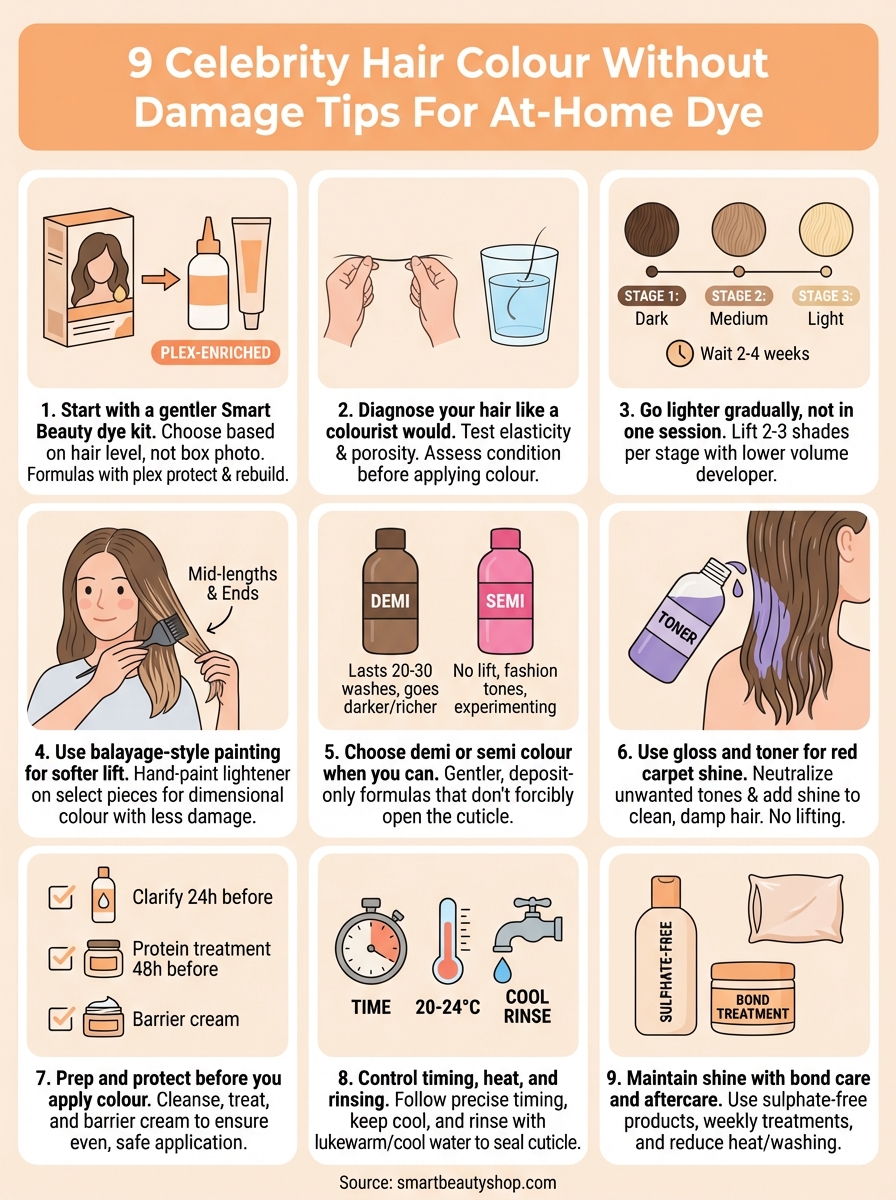
You now have the exact techniques that professional colourists use to achieve celebrity hair colour without damage. These nine strategies work because they respect your hair’s structure while delivering the vibrant, glossy results you see on your favourite stars. The difference between successful at-home colour and disappointing results comes down to preparation, patience, and proper products.
Smart Beauty’s plex-enriched formulas give you the foundation for healthy colour, but your application technique and aftercare habits determine your final results. Start with realistic expectations about your hair’s current condition and how many sessions you’ll need to reach your goal shade. Remember that gradual transformation always beats rushed damage.
Ready to create your own red carpet moment? Browse our bold colour collections designed for zero fear and maximum confidence, where every formula includes strengthening technology that protects while it colours. Your dream shade is waiting, and your hair will thank you for choosing the damage-free route.