
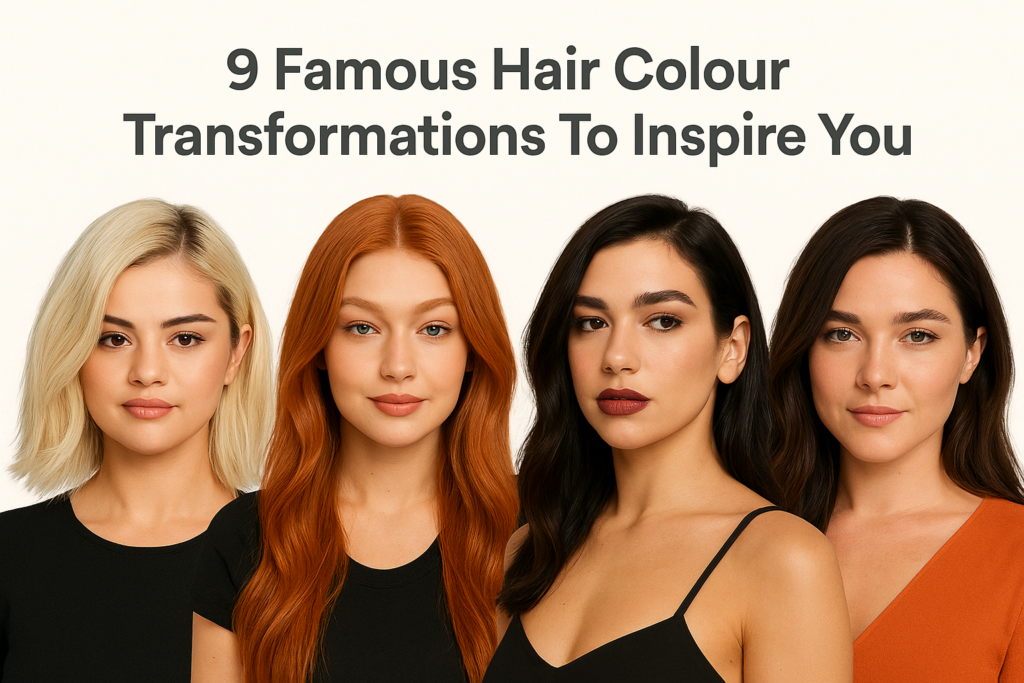
Celebrities have always set the tone for hair trends, and their bold colour changes often spark a wave of inspiration for the rest of us. From dramatic blonde debuts to striking red reinventions, famous hair colour transformations prove that a fresh shade can completely redefine your look, and your confidence.
Whether you’re considering a subtle shift or a head-turning change, seeing how A-listers pull off their new colours can help you visualise what’s possible. At Smart Beauty, we believe salon-worthy results shouldn’t require a salon. Our vegan, cruelty-free, plex-enriched formulas are designed to help you recreate these iconic looks safely from your own bathroom.
We’ve gathered 9 standout celebrity hair colour moments that showcase the transformative power of a great shade. Prepare to find your next colour inspiration, and discover just how achievable these looks can be at home.
1. Smart Beauty celebrity-inspired at-home colour
Recreating famous hair colour transformations at home starts with understanding what makes celebrity shades work so well on camera and in real life. The difference between a successful transformation and a disappointing result often comes down to choosing the right product formula and matching your natural base to the final colour you want. Smart Beauty removes the guesswork by offering plex-enriched, vegan formulas designed to protect your hair while delivering professional vibrancy.
Choose your vibe: natural, bold, or fashion shade
You need to decide whether you want a subtle enhancement, a statement colour, or a fashion-forward shade before you pick your dye. Natural tones like warm browns and soft blondes work with your existing base and grow out gracefully, while bold reds and coppers create impact without veering into fantasy territory. Fashion shades such as silver, pink, or vivid purple demand pre-lightened hair and regular maintenance, but they deliver that unmistakable editorial edge. Your lifestyle, maintenance commitment, and personal style should guide this choice, not just what looks good in a magazine.
Pick the right dye type for your commitment level
Permanent dyes give you long-lasting coverage and work best when you want to go darker or need to cover greys, but they require root touch-ups as your hair grows. Demi-permanent formulas fade gradually over several weeks and offer gentler colour shifts without a harsh regrowth line, making them ideal for trying out new tones. Semi-permanent colours sit on the hair surface, wash out after multiple shampoos, and let you experiment with vibrancy without permanent commitment. Match your dye type to how often you’re willing to refresh your colour.
The right dye type transforms your experience from high-maintenance stress to confident colour control.
Build a safer routine for sensitive scalps
Sensitive scalps need PPD-free, ammonia-free formulas that won’t trigger irritation or allergic reactions during application. Smart Beauty products exclude harsh ingredients like resorcinol, so you can colour your hair without the burning sensation or redness that traditional dyes can cause. Always patch test 48 hours before full application, even with gentler formulas, and apply a barrier cream along your hairline to protect your skin. Spacing out your colour sessions and using a nourishing scalp treatment between applications keeps your skin calm and healthy.
Keep colour glossy with the right aftercare
Glossy, vibrant colour requires sulphate-free shampoo and a colour-depositing conditioner that refreshes your tone between full applications. Heat styling without protection fades colour faster, so apply a thermal spray before using straighteners or curling tools. Weekly hair masks with plex technology strengthen bonds that colouring can weaken, keeping your hair soft and resilient. Cold water rinses seal the cuticle and lock in pigment, preventing your new shade from washing out prematurely.
2. Selena Gomez brunette to platinum blonde
Selena Gomez shocked fans when she traded her signature rich brunette for an icy platinum blonde that looked expensive, polished, and completely intentional. This transformation ranks among the most discussed famous hair colour transformations because she achieved a clean, cool tone without the brassy yellow undertones that plague many DIY platinum attempts. Her stylist lifted her hair gradually and maintained the integrity of her strands throughout the process, proving that dramatic changes don’t have to mean damaged hair.
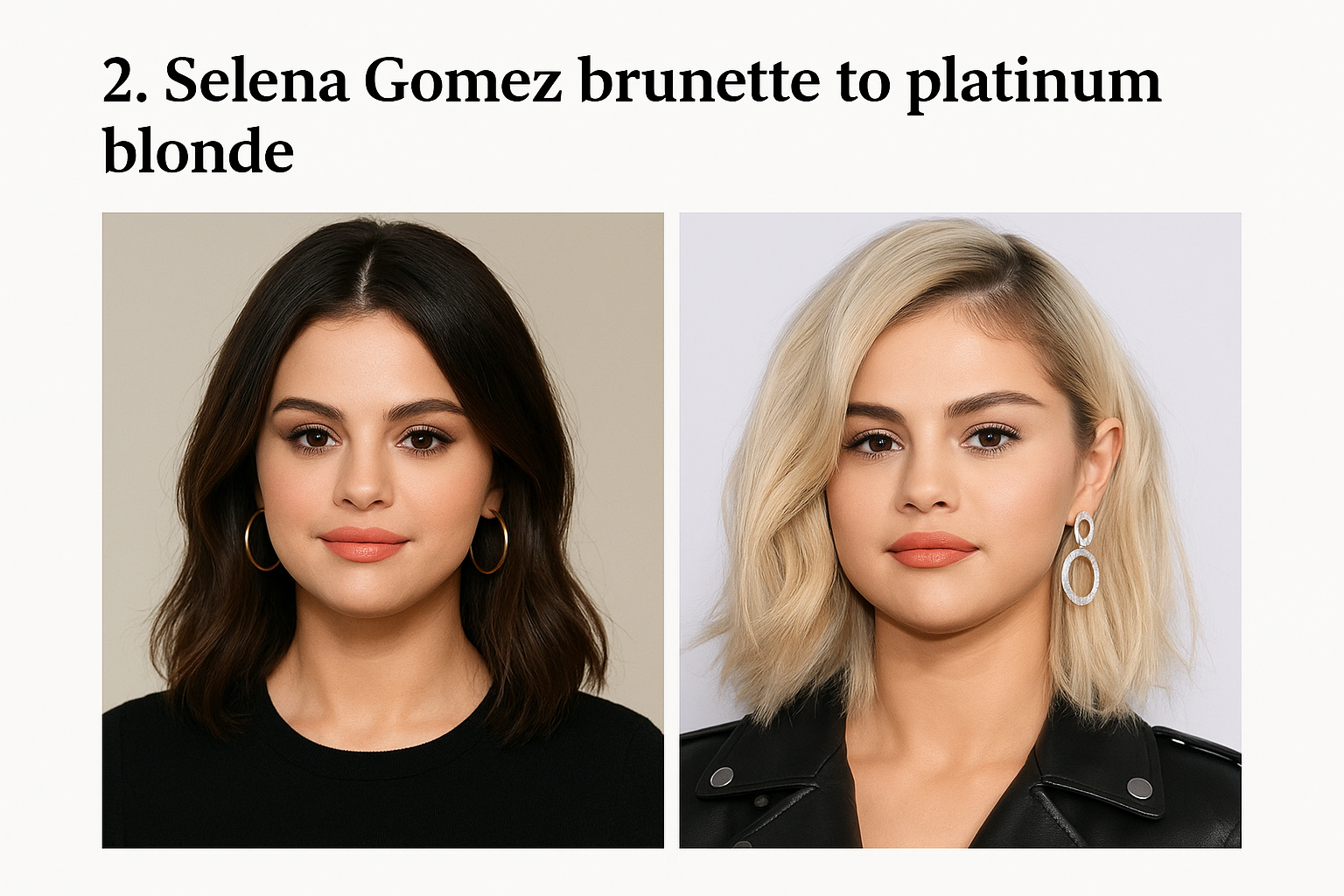
See what made the change look expensive, not brassy
The key to Selena’s platinum success lay in achieving a true cool blonde rather than settling for yellow-toned results. Her colour had an ashy, silvery quality that reflected light beautifully and looked intentional rather than accidental. You can spot expensive platinum by its lack of warmth and its even tone from roots to ends, which requires careful lifting and proper toning. Smart Beauty’s plex-enriched bleach formulas help you lift gradually while protecting your hair structure, preventing the crispy, straw-like texture that makes budget bleach jobs obvious.
Decide if you need bleach or highlights first
Your starting colour determines whether you need full head bleach or can work with strategic highlights to build your platinum gradually. Dark brunettes like Selena require bleach to lift enough pigment for true platinum, while lighter bases might achieve similar results with high-lift blonde dye. Highlights first give you a safer way to test your hair’s response to lightening and create dimension that makes platinum look more natural. Assess your natural base honestly before committing to a full bleach application.
Recreate the cool platinum tone at home safely
Achieving Selena’s cool platinum at home requires bleach application in sections, working from mid-lengths to ends before tackling your roots. You need to lift your hair to a pale yellow stage before applying a violet-based toner that neutralises remaining warmth. Smart Beauty’s bleach kits include plex technology that strengthens bonds during the lift, reducing breakage and maintaining softness. Apply toner immediately after rinsing bleach to lock in that cool, silvery finish.
Platinum success depends more on proper toning than on how light you bleach your hair.
Maintain platinum with toner, masks, and root planning
Platinum hair needs purple shampoo twice weekly to prevent yellow tones from developing between salon or home touch-ups. Deep conditioning masks restore moisture that bleaching removes, keeping your hair soft and preventing that dry, brittle texture. Plan your root touch-ups every four to six weeks, applying bleach only to new growth rather than overlapping onto previously lightened hair. Regular toning refreshes your cool shade and keeps your platinum looking intentional rather than grown out.
3. Billie Eilish green roots to soft blonde
Billie Eilish’s shift from her iconic neon green roots to an all-over soft blonde marked one of the most talked-about transitions among recent famous hair colour transformations. Her signature look had become so recognisable that the change felt like a complete reinvention, proving how powerfully colour defines your visual identity. The move required careful colour removal and controlled lifting to avoid turning her previously vibrant hair into a damaged, uneven mess.
Understand why the blonde shift felt so dramatic
Billie’s transformation felt seismic because she’d built her entire visual brand around high-contrast green roots paired with dark lengths, making the uniform blonde a total departure. The shift eliminated all traces of her previous colour story and created a softer, more mature aesthetic that changed how people perceived her image. When you remove a defining colour feature and replace it with something neutral, you amplify the transformation’s impact far beyond just a shade change. Her choice of a creamy, warm blonde rather than platinum also softened her look significantly.
Work out what you must remove before you recolour
You need to strip out artificial pigment from vivid colours like green before attempting to lift to blonde, or you’ll end up with muddy, unpredictable tones. Colour removers work by shrinking dye molecules so they wash out, leaving your hair closer to its natural base without the damage bleach causes. After removal, assess your hair’s condition and remaining pigment before deciding whether you need one or multiple lifting sessions to reach your target blonde. Never apply bleach directly over vivid fashion colours without proper removal first.
Skipping colour removal before lifting to blonde guarantees patchy results and wasted product.
Move from vivid to blonde without frying your hair
Transitioning from vivid colour to blonde requires gradual lifting sessions spaced at least two weeks apart to maintain your hair’s structural integrity. Smart Beauty’s plex-enriched bleach protects bonds during the lift, preventing the brittle, elastic texture that comes from over-processing. Apply bleach to mid-lengths and ends first, then process your roots separately to avoid hot roots and ensure even colour. Deep condition between sessions to restore moisture and keep your hair manageable throughout the transition.
Stop unwanted tones creeping back in
Previously coloured hair can leach old pigment back to the surface, especially green tones that cling stubbornly to porous strands. Purple shampoo neutralises yellow, but you need a toning treatment specifically formulated to counteract green if traces reappear after washing. Seal your cuticle with cold water rinses and use colour-protecting products that prevent pigment from lifting out during regular washing. Regular toning sessions every few weeks maintain your blonde’s clean appearance and stop any unwanted colour memory from showing through.
4. Kim Kardashian brunette to ice platinum
Kim Kardashian’s transition from her classic dark brunette to a stunning ice platinum blonde became one of the most influential famous hair colour transformations in recent years. Her stylist achieved a shade so bright and cool that it looked almost white under certain lighting, yet her hair remained surprisingly healthy throughout the process. The transformation required multiple lifting sessions and precise toning to reach that ultra-pale, silvery finish without destroying her hair’s integrity.
Spot the details that make platinum look clean
Kim’s platinum succeeded because it had zero warmth, appearing almost blue-toned rather than yellow or creamy. The colour looked uniform from her scalp to her ends, with no patchy areas or darker sections that would reveal uneven lifting. You can identify truly clean platinum by its reflective quality and the way it photographs with a cool, almost icy cast. Smart Beauty’s violet-based toners help you achieve this level of coolness by neutralising any remaining yellow pigment after bleaching.
Map your lift level before you commit
Your natural brunette base determines how many lifting sessions you need to reach ice platinum safely without causing severe breakage. Dark hair requires bleach application in stages, often three or more sessions, to lift from brown to pale yellow without over-processing. Assess your hair’s porosity and previous colour history before planning your timeline, as previously coloured hair lifts differently than virgin strands. Never attempt to reach ice platinum in one session from dark brunette.
Rushing to platinum from dark hair guarantees damage that no amount of conditioning can repair.
Get an icy finish at home without over-toning
You need to lift your hair to a pale banana yellow before applying your icy toner, as darker bases won’t take on the cool tone properly. Smart Beauty’s plex-enriched bleach lifts gradually while protecting your hair structure, preventing that crispy texture. Apply a violet or blue-violet toner for 10 to 20 minutes depending on how cool you want the result, checking every five minutes to avoid over-depositing purple pigment. Rinse with cool water to seal the cuticle and lock in your icy tone.
Keep the tone bright between washes
Ice platinum needs purple shampoo after every second wash to prevent brassiness from developing and ruining your cool tone. Deep conditioning treatments restore moisture without weighing down your hair or making it look greasy. Schedule your root touch-ups every four weeks, applying bleach only to new growth to avoid overlapping and creating breakage. UV protection sprays prevent sun exposure from warming your platinum and turning it yellow between colouring sessions.
5. Dua Lipa black to platinum with dark underlayer
Dua Lipa’s high-contrast platinum and black combination represents one of the boldest takes on recent famous hair colour transformations, showcasing how strategic colour placement creates maximum impact. She kept her underneath layers dark while lifting her top sections to platinum, creating a dimensional look that photographs beautifully and works equally well styled up or down. This technique offers the drama of platinum without committing your entire head to constant maintenance, making it a practical choice for those who want statement colour with built-in flexibility.
See why high contrast reads modern on camera
High contrast hair creates visual depth that translates exceptionally well in photographs and video, preventing your hair from looking flat or one-dimensional. The sharp division between platinum and black gives your hair a structured, editorial quality that feels intentional rather than grown out. Modern colouring techniques embrace contrast instead of blending everything seamlessly, which explains why this look dominated social media and red carpets. Your eye naturally follows the colour shifts, making your hairstyle look more dynamic and interesting from every angle.
Decide between full head, money piece, or split tones
You can achieve contrast through several approaches: full top section platinum like Dua’s, face-framing money pieces for subtle impact, or split tones where you divide your hair vertically. Full top sections give you the most dramatic result but require more bleach and maintenance, while money pieces concentrate platinum around your face for brightness without full commitment. Split tones work best on longer hair where you can clearly see the division. Consider your styling habits and how often you wear your hair up when choosing your placement.
Strategic platinum placement gives you drama where it counts without bleaching your entire head.
Protect your lengths while you lift selected sections
Sectioning your hair accurately prevents bleach from bleeding onto areas you want to keep dark, which would ruin your clean contrast lines. Apply a barrier cream or conditioner along your parting lines before bleaching to create a buffer zone that stops accidental overlap. Smart Beauty’s plex-enriched bleach protects the hair you do lighten, maintaining strength and elasticity throughout the lift. Clip away dark sections securely and check your sectioning in a mirror from multiple angles before applying product.
Refresh contrast without constant re-bleaching
Your platinum sections need root touch-ups every four to six weeks, but your dark underlayer grows out gracefully without requiring constant colour. Purple shampoo maintains your platinum tone between colouring sessions, while your dark base provides visual contrast that makes your roots less obvious. You can extend time between bleach applications by focusing toner refreshes on visible top sections rather than processing everything. This approach gives you statement colour with half the maintenance commitment of all-over platinum.
6. Gigi Hadid blonde to copper red
Gigi Hadid’s shift from her signature cool blonde to a vibrant copper red demonstrated how warm tones can completely transform your look while maintaining a sophisticated edge. Her colour sat somewhere between strawberry blonde and true copper, giving her a rich, dimensional finish that caught light beautifully and photographed with incredible depth. This transformation proves that moving from blonde to copper requires less maintenance than you might expect, making it one of the more practical famous hair colour transformations for those ready to embrace warmth.
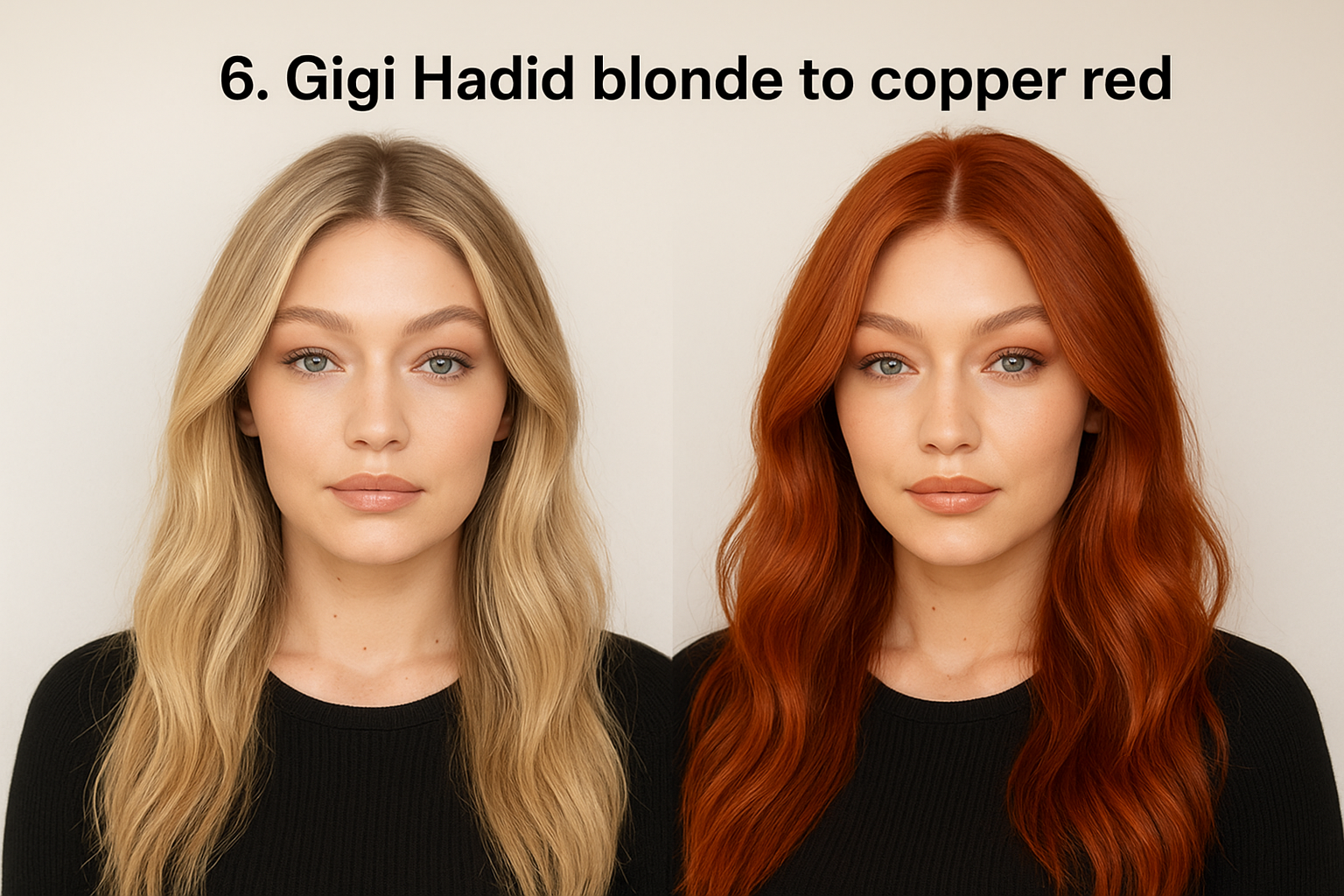
See why copper looks rich when you get the depth right
Copper colour succeeds when it has enough pigment saturation to look intentional rather than washed out or accidentally orange. Gigi’s shade worked because her colourist deposited rich red-orange tones onto her pre-lightened base, creating depth that prevented the colour from appearing flat. You achieve this richness by choosing a copper formula with strong pigment concentration and applying it to hair that’s been lifted to the right level. Blonde bases take copper beautifully because they allow the warm tones to show true without competing with darker underlying pigment.
Choose between strawberry, true copper, and auburn
Strawberry copper leans pinker and softer, working best for those who want warmth without going too orange or intense. True copper sits in the red-orange spectrum and creates bold, fiery results that demand attention and confidence. Auburn copper adds brown depth to the red, making it richer and more suitable for those who prefer subtlety. Your skin’s undertone guides this choice, with cool undertones handling strawberry better and warm undertones supporting true copper.
Deposit copper at home with minimal damage
Your blonde base means you can deposit copper directly without bleaching, as the colour sits on top of your existing light hair. Smart Beauty’s demi-permanent copper formulas contain plex technology that protects your hair while adding vibrant colour. Apply colour to clean, dry hair in sections, saturating thoroughly from roots to ends for even coverage. Process for the full development time to ensure the pigment takes properly and gives you lasting vibrancy.
Depositing copper onto blonde causes virtually no damage compared to lifting dark hair first.
Prevent fast fade and keep copper from going dull
Copper fades faster than most colours because red pigment molecules are small and wash out easily during shampooing. You need sulphate-free shampoo and lukewarm water to slow this fade and preserve your vibrancy between colour refreshes. Colour-depositing conditioners in copper tones refresh your shade weekly, preventing the colour from turning dull or brassy. UV protection products stop sun exposure from oxidising your copper and turning it orange or faded.
7. Katy Perry dark hair to platinum pixie
Katy Perry’s dramatic leap from long dark hair to a cropped platinum pixie remains one of the most daring famous hair colour transformations that combined both cut and colour for maximum impact. Her choice to go platinum while simultaneously chopping her hair short amplified the transformation’s shock value and proved that short platinum carries a confidence and edge that longer platinum often lacks. The combination required precise bleaching technique and careful maintenance to keep the look sharp rather than grown out.
Understand why short platinum looks bolder than long
Short platinum creates a concentrated burst of brightness around your face that draws attention to your features rather than your hair length. You can’t hide behind long hair or use styling to soften the impact, which makes the colour statement more direct and powerful. Platinum pixies photograph with incredible clarity and dimension because the short length prevents the colour from looking flat or heavy. Your maintenance shows immediately on short hair, so the look requires commitment to keeping your colour fresh and your cut sharp.
Decide if you can lift in one go or need stages
Dark hair like Katy’s demands multiple lifting sessions spaced two to three weeks apart to reach platinum safely without destroying your hair’s structure. You risk severe breakage and chemical burns if you attempt to lift from dark brown to platinum in a single session. Assess your hair’s thickness and previous colour history before planning your timeline, as virgin hair tolerates bleach better than previously processed strands. Smart Beauty’s plex-enriched bleach protects bonds during each lift, maintaining enough strength for your hair to survive the full transformation.
Short hair tolerates aggressive lightening better than long hair because you can trim away damaged ends immediately.
Handle roots, scalp comfort, and even coverage at home
Your scalp becomes more sensitive when you bleach short hair because the bleach sits closer to your skin and can cause more direct contact. Apply barrier cream along your hairline and partings before starting, and work quickly to minimise processing time on your scalp. Section your hair into small quadrants for thorough coverage, as missing spots show glaringly obvious on short platinum. Use a brush with firm bristles to ensure bleach reaches every strand from roots to ends.
Keep short platinum looking intentional, not grown out
Short platinum demands root touch-ups every three to four weeks because even minimal regrowth creates a visible dark band against your bright colour. Purple shampoo maintains your cool tone between colouring sessions and prevents yellow warmth from developing. Regular trims every four to six weeks keep your pixie shape sharp and remove any ends that start looking dry or damaged. Toning treatments refresh your platinum’s brightness and ensure your colour looks deliberate rather than neglected.
8. Megan Fox brunette to copper brunette
Megan Fox’s shift from cool-toned brunette to a warm copper brunette showcased how subtle warmth can elevate your existing colour without requiring a complete overhaul. Her transformation added rich, dimensional copper to her base while maintaining enough depth to look natural and sophisticated rather than artificial. This approach works particularly well for brunettes who want to refresh their look with warmth but aren’t ready to commit to full copper or red, making it one of the more wearable examples of famous hair colour transformations.
Copy the warm shift that still looks natural
Megan’s copper brunette succeeded because it enhanced her natural depth rather than fighting against it, creating warm highlights throughout instead of flat, single-tone colour. Her colourist layered copper tones strategically, concentrating brightness around her face while keeping her base darker for contrast. You achieve this natural warmth by choosing a copper shade that sits only one or two levels lighter than your current brunette, preventing the jump from looking too dramatic. Natural results come from building warmth gradually rather than depositing intense copper all at once.
Choose a copper that flatters your undertone
Warm skin undertones handle true copper with orange-red tones beautifully, while cool undertones need copper that leans more towards red or even burgundy to avoid clashing. Your natural brunette base also influences which copper works best, with lighter browns taking brighter copper and darker bases requiring richer, more subdued warmth. Test your undertone by checking whether gold or silver jewellery flatters you more, then select copper accordingly. Smart Beauty’s range includes copper shades formulated for different undertones, removing the guesswork from your selection.
Copper that flatters your undertone looks like it belongs on your head, not like you’re wearing someone else’s colour.
Add warmth at home without turning orange
You prevent orange results by ensuring your brunette base has enough natural or existing warmth to support copper deposition. Apply copper dye to clean, dry hair and process for the full recommended time to allow proper pigment penetration. Smart Beauty’s plex-enriched copper formulas deposit rich colour without requiring pre-lightening on lighter brunette bases. Strand test before full application to confirm your hair takes the copper tone you want rather than oxidising orange.
Keep warmth balanced with the right wash routine
Copper brunette needs colour-safe shampoo that preserves warmth without letting it intensify into brassy territory. Wash your hair in lukewarm water rather than hot, which opens your cuticle and strips pigment faster. Weekly colour-depositing treatments in copper tones refresh your warmth between full colouring sessions and prevent fade. Balance maintenance by avoiding purple shampoo, which neutralises the warm tones you’ve worked to create.
9. Florence Pugh blonde to deep brunette
Florence Pugh’s transition from her signature platinum blonde to a rich, deep brunette proved that going darker can be just as transformative as going lighter. Her choice stood out among recent famous hair colour transformations because it moved against the grain of celebrity colour trends, which typically favour lighter shades. The shift gave her a more dramatic, sophisticated look that emphasised her features and created a completely different aesthetic from her previous bright blonde image.
See how going darker can sharpen your features
Darker hair creates stronger contrast against your skin, which naturally draws attention to your eyes, cheekbones, and jawline in ways that lighter hair can soften. Florence’s brunette made her features appear more defined and gave her a bolder, more striking presence that photographed with increased intensity. You gain this sharpening effect because dark colours recede visually while your skin tones come forward, creating natural contouring without makeup. Blonde can wash out your features under certain lighting, whilst brunette adds depth and dimension that enhances your natural bone structure.
Pick the right brunette: neutral, ash, or chocolate
Neutral brunette contains balanced warm and cool tones, working well on most skin undertones without clashing or looking muddy. Ash brunette leans cool with grey or green undertones, creating a modern, sophisticated finish that suits fair or cool-toned skin. Chocolate brunette adds warmth with red or golden undertones, flattering warm skin tones and creating richness. Your natural undertone determines which brunette prevents your skin from looking sallow or washed out.
Fill blonde hair properly before you go dark at home
Blonde hair lacks the underlying pigment that brunette dye needs to grip onto, which causes uneven fading and patchy colour if you skip proper filling. Apply a protein filler or a red-gold shade one level lighter than your target brunette to create a base layer that helps the final colour stick. Smart Beauty’s demi-permanent formulas contain enough pigment to fill and colour simultaneously on some blonde bases. Strand test to confirm your hair takes the brunette evenly rather than grabbing dark in some areas whilst staying light in others.
Filling blonde hair before going brunette prevents that washed-out, greenish tone that screams DIY mistake.
Maintain shine and stop brunette fading to flat tones
Brunette hair needs colour-depositing shampoo in your target tone to refresh pigment between full colouring sessions and prevent fade. Deep conditioning treatments restore shine that darker colours can sometimes dull, keeping your brunette looking glossy rather than flat. Rinse with cold water to seal your cuticle and lock in colour, preventing the warm or ashy tones from washing out prematurely. UV protection products stop sun exposure from lightening your brunette and turning it brassy or red.
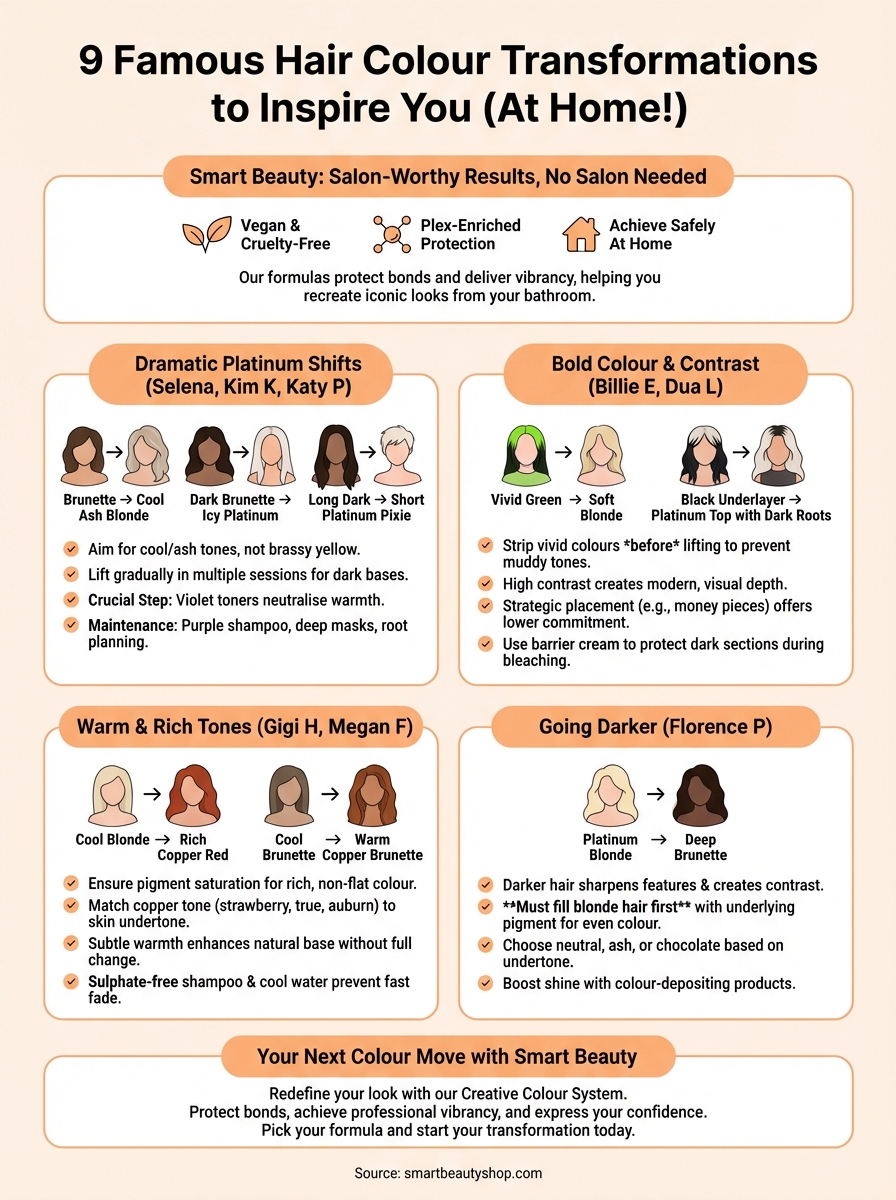
Your next colour move
These famous hair colour transformations prove that the right shade can redefine your entire look, whether you’re chasing platinum brightness, warm copper tones, or a dramatic brunette shift. You’ve seen how celebrities work with their natural base, choose formulas that protect their hair, and maintain their colour with targeted aftercare. Now you can apply these same principles to your own transformation at home.
Smart Beauty removes the intimidation from bold colour changes by offering plex-enriched, vegan formulas designed to deliver professional results without professional prices. Your hair deserves colour that looks intentional, feels healthy, and reflects your confidence. Whether you’re ready to lighten, deepen, or completely reinvent your shade, our Creative Colour System gives you the tools to create your next defining look. Pick your inspiration, choose your formula, and start your transformation today.