
Artikel: Thick Fiber Root Touch Up Powder: What It Is And How It Works
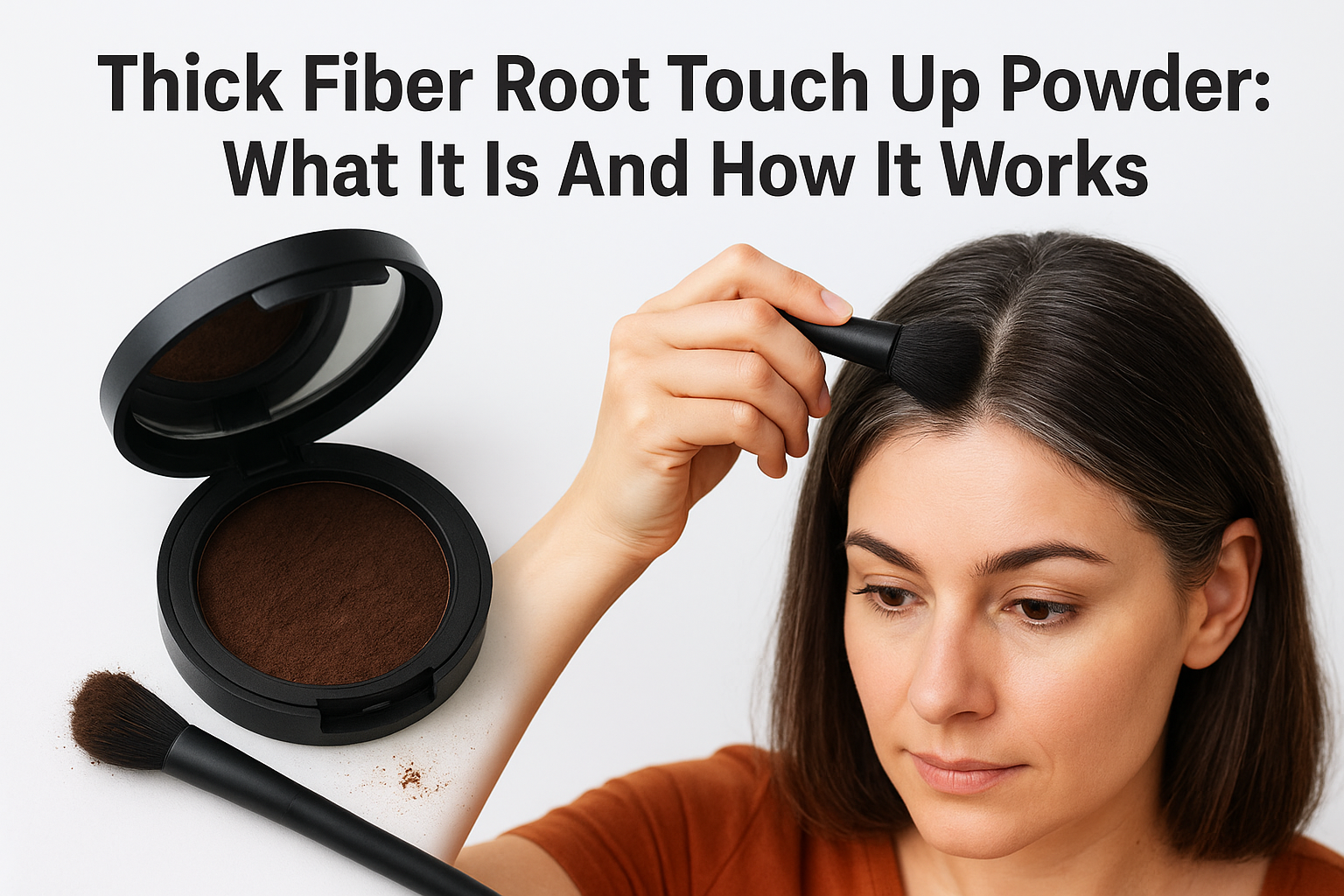
Thick Fiber Root Touch Up Powder: What It Is And How It Works
Grey roots showing up two weeks after your last colour session is annoying enough. A thinning hairline or a bald patch catching the light is a different kind of frustrating, and no amount of dye fixes that. This is where thick fiber root touch up powder comes in, and it works on a completely different principle than the hair colour sitting in your bathroom cabinet.
Instead of dyeing the hair shaft, these powders use tiny electrostatic fibres that cling to your existing strands and scalp, instantly building thickness and camouflaging bare patches. A good thick fiber root touch up powder can hide grey regrowth, disguise a widening parting, and make thinning areas look fuller in under a minute, with no mixing, no mess, and no commitment to a new shade.
In this article, we'll explain exactly what these powders are made from, how the fibres bond to your hair, and how they compare to root touch up sprays and traditional dye. We'll also cover application tips so you get natural-looking coverage every time, and how to keep your results looking sharp between colouring appointments.
Why root touch up powder matters for thinning hair
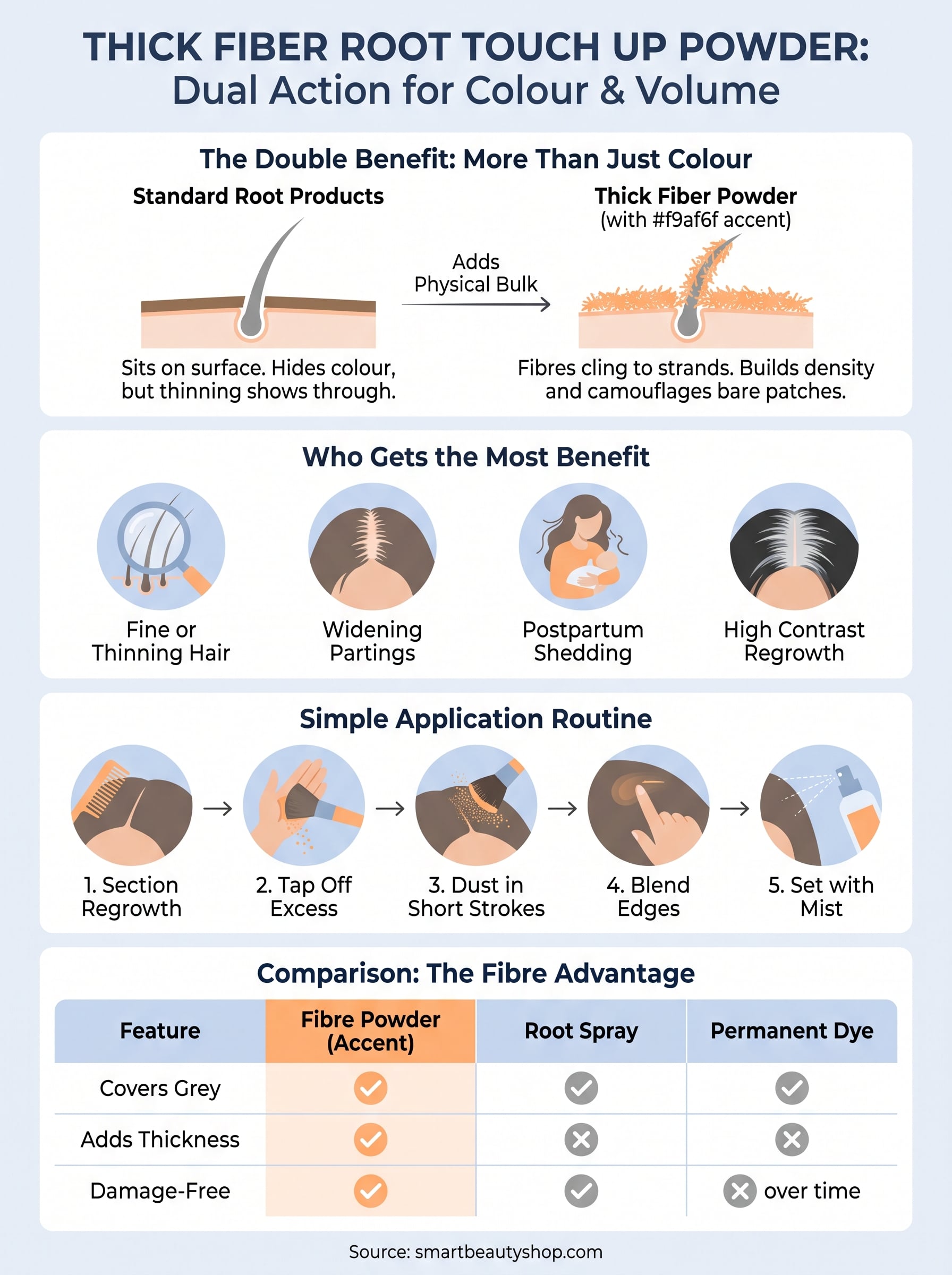
Grey regrowth and thinning hair often show up together, especially once you're past forty, and most root products are only built to solve one of those problems. Standard root touch up sprays and pigmented mousses can knock back the colour contrast, but they sit on top of the hair rather than adding to it, so a widening parting or a thin patch at the crown still shows straight through. A thick fiber root touch up powder works differently because it doesn't just tint, it bulks. The fibres physically cling to each strand, so you get colour correction and visible density in the same two minutes.
The double job most root products can't do
This matters most for anyone dealing with androgenetic thinning, postpartum shedding, or just naturally fine hair that's lost volume with age. A concealer that only masks colour leaves the scalp visible whenever the light catches it from the side, which is exactly when thinning looks worst. Fibre-based powders close that gap by building a fuller-looking base along the parting and hairline, not just disguising the grey underneath it.
A root powder that only hides colour still leaves thin patches visible; one that adds fibre thickness solves both problems at once.
Who gets the most benefit
Some hair types and situations lean on this product more than others. It's worth knowing where it earns its place in your routine:
- Fine or fine-medium hair that shows scalp easily under bright light or flash photography
- Widening partings from years of the same style or tension styling
- Postpartum or hormonal shedding where regrowth is patchy rather than uniform
- Grey regrowth on darker base colours, where the contrast is sharpest and most obvious
- Between-colour touch-ups when you're not ready for a full dye session but need roots sorted for a few days
Without it, most people either book more frequent salon visits than their budget or hair health can handle, or they live with roots on show for longer than they'd like. A root touch up powder built with thickening fibres gives you a third option: a fast fix that buys time without compromising your hair's condition.
How to apply root touch up powder for a natural finish
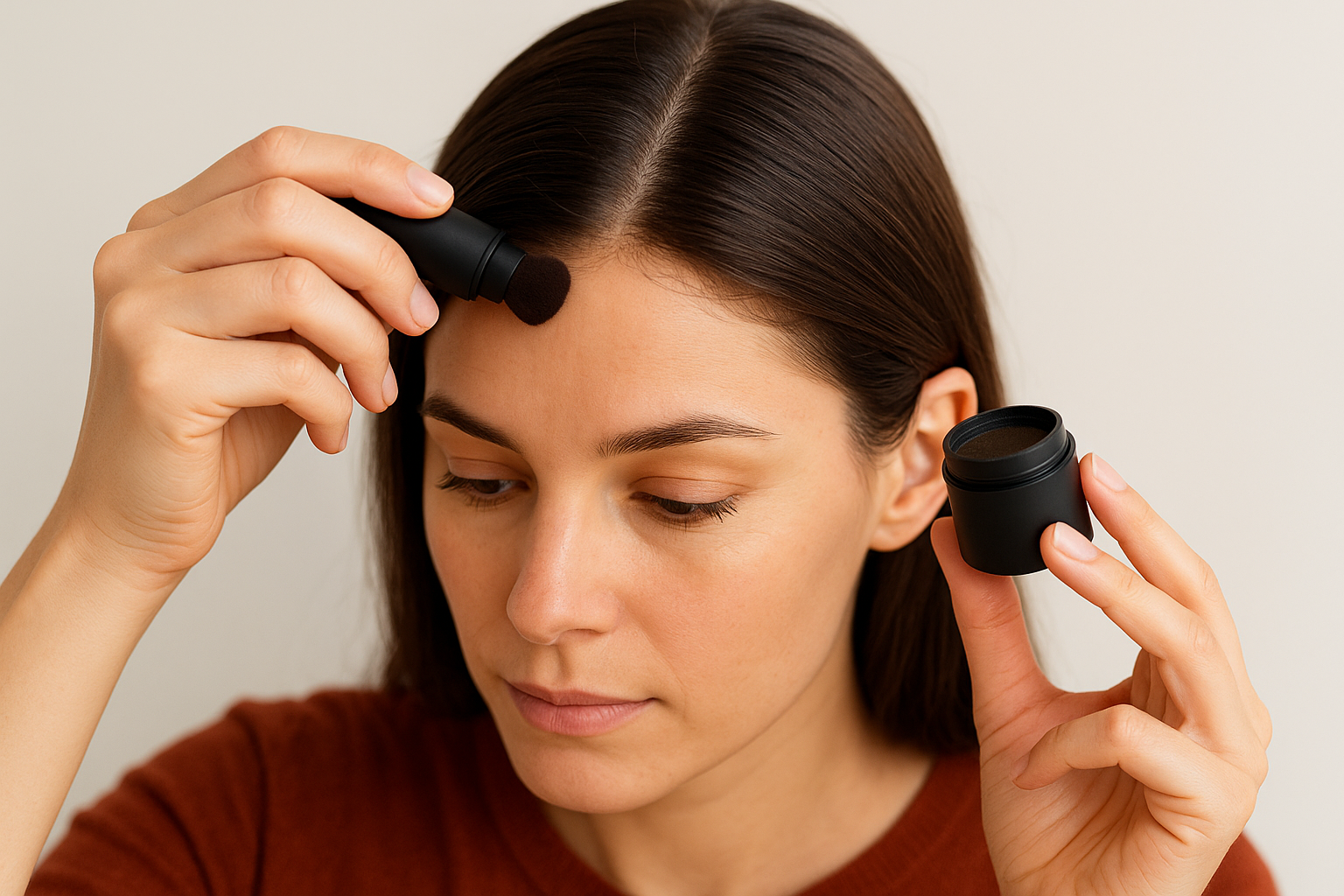
Getting a natural result comes down to technique more than product choice. Most thick fiber root touch up powder kits come with a small applicator brush or dual-sided sponge, and the trick is building colour in thin layers rather than pressing on a thick coat in one go. Start with dry hair and dry scalp, since damp strands make the fibres clump instead of gripping evenly.
A simple step-by-step routine
Follow this order every time and you'll avoid the two most common mistakes: patchy coverage and product that transfers onto your collar.
- Section the regrowth along the parting so you can see exactly where the fibres need to go.
- Tap the applicator lightly against your palm first to knock off excess powder.
- Dust in short strokes following the direction of hair growth, working from the parting outward.
- Blend the edges with a clean finger or the sponge tip so the line between root and colour disappears.
- Set with a light mist of hairspray to lock the fibres in place for the day.
Fixing common application slip-ups
If the result looks too dark or sits unevenly, don't panic and start scrubbing. Brushing through with a soft bristle brush lifts excess fibre without disturbing the base colour underneath. Overloading one spot is the usual cause of patchiness, so go back with smaller amounts rather than one heavy pass.
Thin layers built up gradually always look more natural than one heavy application.
Once you're set, expect the coverage to hold through normal daily activity, though heavy sweating or rain will shorten how long it lasts.
Choosing the right shade and formula for your hair
Matching the powder shade to your actual colour matters more than matching it to your hair's underlying tone. Thick fiber root touch up powder works best when you pick a shade that sits close to your current dye rather than your natural colour, since the fibres are covering regrowth against that colour, not against your roots at birth. Brands typically offer shades like Black, Dark Brown, Medium Brown, Light Brown, and Blonde, and going one shade lighter than you think you need usually blends better than guessing dark.
Matching shade to base colour
Use this as a rough guide when you're stuck between two options:
| Your current dye shade | Best powder shade | Why |
|---|---|---|
| Jet black or espresso | Black | Avoids a brownish halo at the roots |
| Chocolate or chestnut brown | Dark Brown | Closest natural blend |
| Caramel or golden brown | Medium Brown | Keeps warmth without going flat |
| Ash or ashy blonde | Light Brown or Blonde | Prevents an orange cast |
| Platinum or bleach blonde | Blonde | Only shade that won't show as a grey shadow |
Choosing a shade a touch lighter than your instinct almost always looks more natural than going darker.
Formula considerations beyond colour
Hair texture changes how a formula performs just as much as shade does. Fine hair needs a lighter dusting and a finer fibre size, since coarse fibres can look clumpy on thin strands, while thicker or coarser hair can handle a denser application without looking heavy. Check the ingredient list too: vegan and cruelty-free formulas free from PPD, ammonia, and resorcinol matter if you've got a sensitive scalp or simply want a product that aligns with an ethical routine, and they're worth prioritising over a slightly wider shade range.
How it compares with dyes, sprays and other root concealers
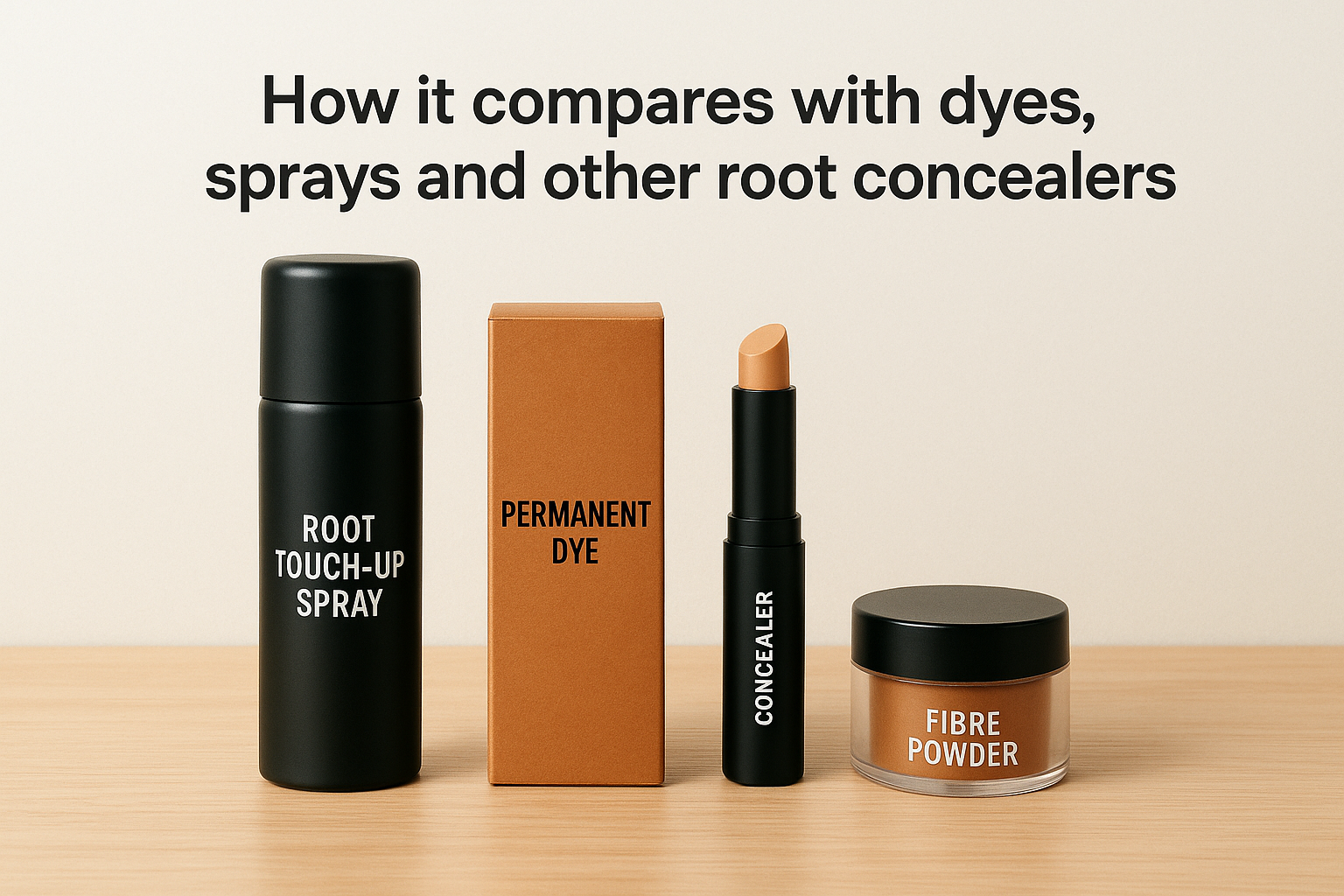
Root touch up sprays give you speed but not much else. They tint the strand's surface, so they knock down colour contrast, yet they add zero density, which means a thinning parting still shows through the mist. Permanent dye solves the grey properly but takes thirty to forty minutes, needs mixing, and does nothing for volume either. A thick fiber root touch up powder sits in a different category entirely because it's building fibre bulk on the strand, not just changing what colour it reflects.
Where each option actually wins
Honestly, none of these products are interchangeable, they solve different problems:
| Product type | Speed | Covers grey | Adds thickness | Damages hair |
|---|---|---|---|---|
| Root touch up spray | Instant | Yes | No | No |
| Permanent dye | 30-40 min | Yes | No | Yes, with repeated use |
| Concealer stick/crayon | Instant | Yes | Slight | No |
| Fibre powder | 1-2 min | Yes | Yes | No |
If thinning is part of your problem, only a fibre-based formula tackles colour and density in the same step.
Crayons and concealer sticks land somewhere in between. They're quick and mess-free like a powder, but the pigment sits on top rather than gripping the strand, so thin areas still peek through under bright light. Sprays work fine for pure grey coverage on hair that's otherwise full, but they're the wrong choice if density is your actual concern. Ultimately, the fibre powder earns its place as the only product that handles a widening parting and grey regrowth at once, without any commitment to a new dye job.
Getting confident, natural-looking roots between colours
Root regrowth doesn't have to mean choosing between an obvious grey line and a rushed salon booking. A thick fiber root touch up powder gives you a genuine middle option: two minutes with an applicator brush, and both the colour contrast and the thinning look sorted until your next full colour session. Once you've matched your shade properly and built up thin layers rather than one heavy pass, the results hold up under normal daily wear without looking cakey or fake.
Used well, this becomes less of an emergency fix and more of a regular part of your routine, the same way you'd reach for a root spray or a touch-up brush. When you're ready to tackle the colour itself rather than just the regrowth, browse Smart Beauty's Cover & Care System for grey coverage that's kind to your hair between fibre touch-ups.