
Artikel: How Long Does Balayage Last? Timeline And Tips To Extend It
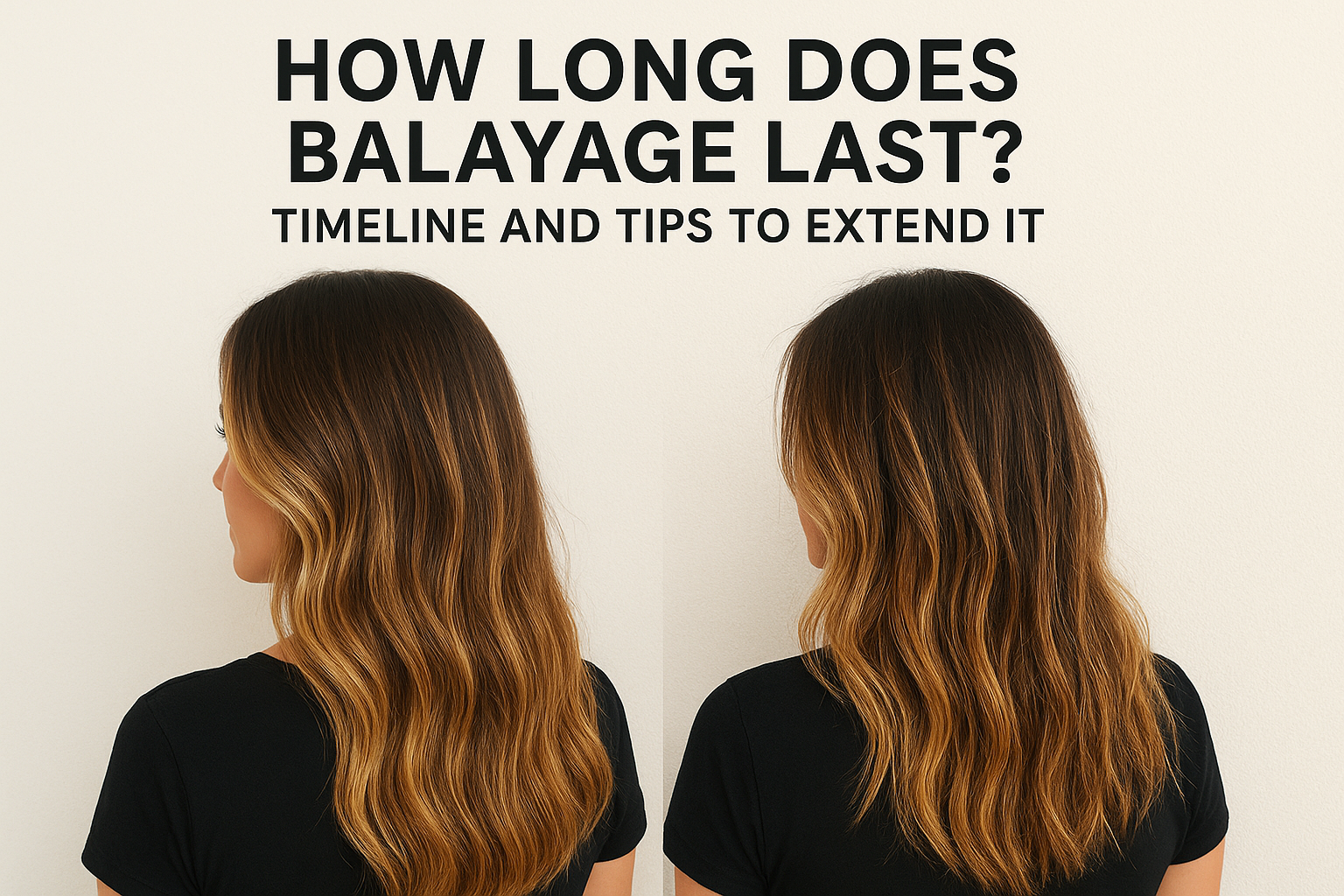
How Long Does Balayage Last? Timeline And Tips To Extend It
If you've just had balayage done, or you're weighing up whether to book it, how long does balayage last is the first question worth answering properly. Unlike a full-head colour that grows out in an obvious line, balayage is meant to fade gently and grow gracefully. But "gently" still has a timeline, and knowing it helps you plan your next appointment or your next box of dye without any surprises.
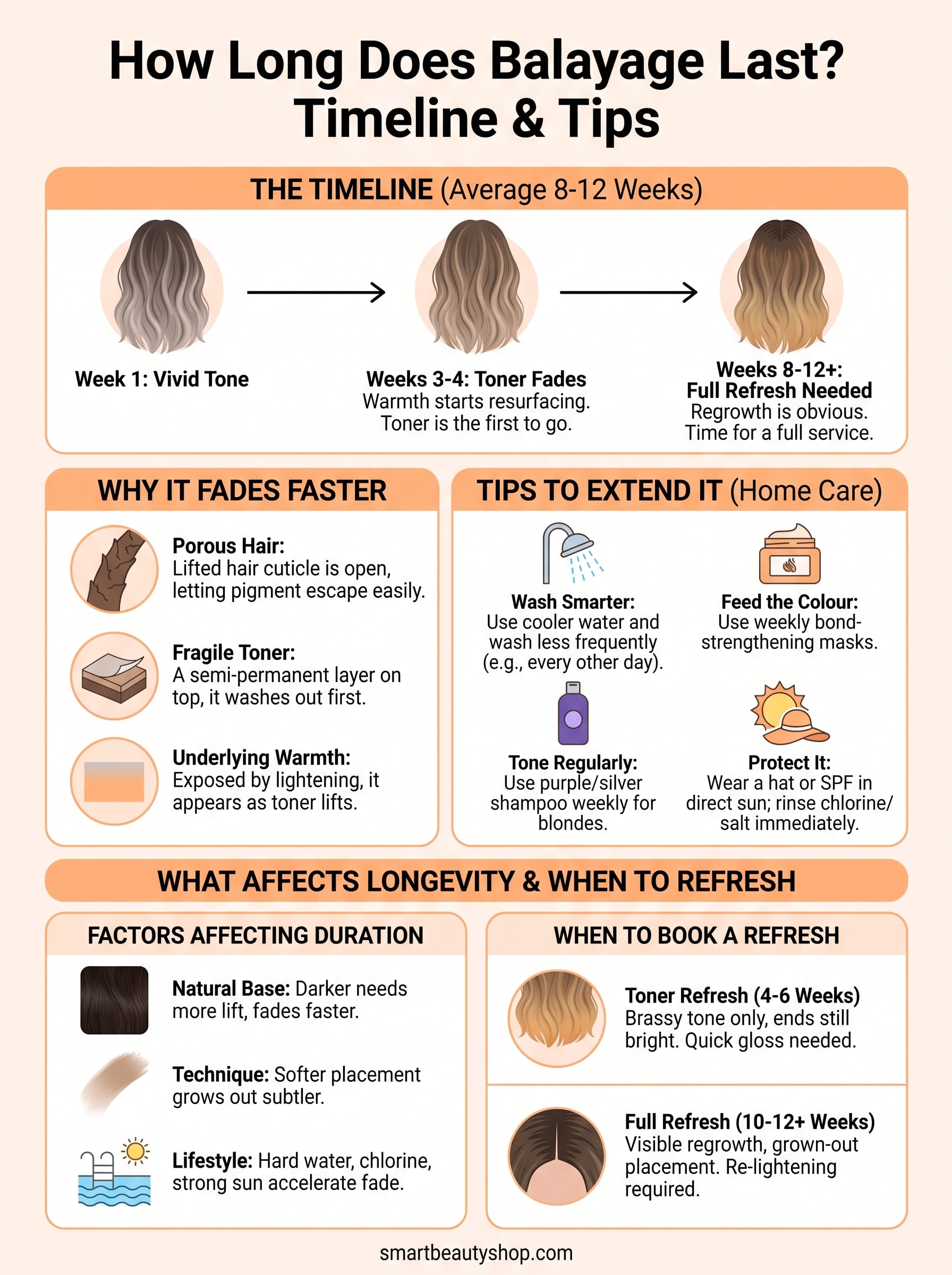
On average, balayage lasts 8 to 12 weeks before it needs a refresh, though that window shifts depending on your natural hair colour, the lightener used, and how well you look after it afterwards. Some clients stretch it to four months with the right aftercare, while others notice fading within six weeks if they're washing daily or swimming often.
In this guide, we'll break down the realistic timeline for balayage regrowth and fade, explain what speeds it up, and share practical tips for extending it at home, including when a colour refresher or root touch-up from our range can help you hold onto that just-dyed look for longer.
Why balayage fades faster than you might expect
Balayage looks like it should last forever because there's no obvious root line, but the colour itself is doing more work than a single-process dye job. The lightener opens the hair cuticle far wider than a demi-permanent gloss does, and that open cuticle keeps letting colour molecules slip out with every wash. Lifted hair is porous hair, and porous hair holds onto pigment far less stubbornly than virgin strands. That's the trade-off behind the low-maintenance reputation: less regrowth to worry about, but faster tonal fade underneath.
The toner is the first casualty
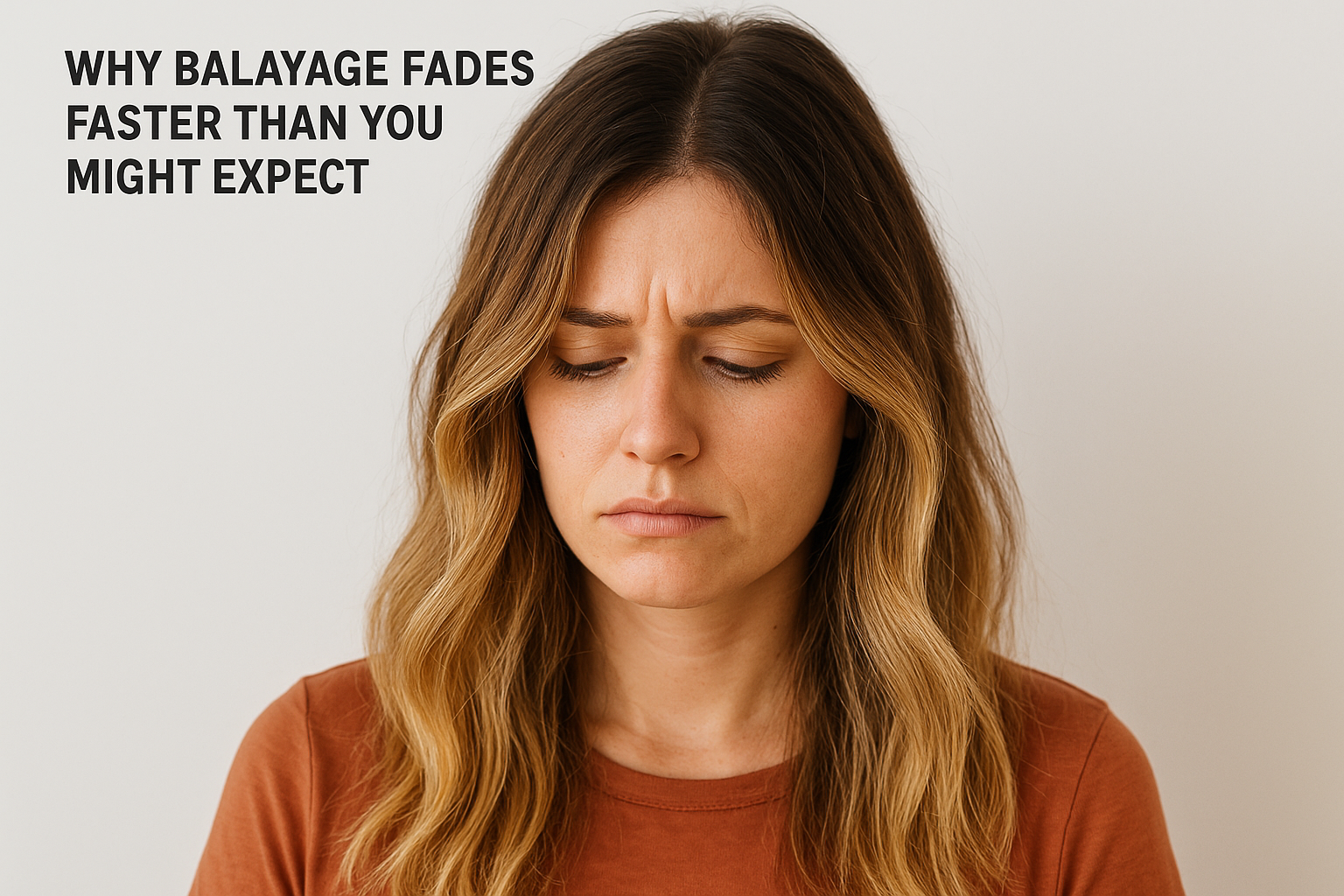
Toner is what gives balayage its beige, ash, or champagne finish, and it's also the most fragile part of the whole service. Toners sit on top of lightened hair as a semi-permanent layer, so they wash out gradually from the very first shampoo. Within three to four weeks, most clients notice their cool blonde edging back towards warm yellow, not because the lightening faded, but because the toner did.
The toner fades weeks before the lightener does, which is why balayage looks brassy long before it looks grown out.
Warmth resurfaces from underneath
Every natural hair colour carries underlying warmth, whether it's red, orange, or gold, and lightening exposes that warmth rather than removing it. Once the cool toner lifts, that underlying pigment resurfaces, which is why balayage often looks brassy at week five even though the lightened sections haven't moved. This is a chemistry issue, not a fault in the application.
Washing accelerates everything
Hot water, frequent shampooing, and chlorine or salt water all strip colour molecules faster than time alone would. Someone washing their hair every day will see noticeably more fade by week six than someone washing twice a week, even with identical formulas applied in the salon.
| Weeks since balayage | What typically happens |
|---|---|
| 1-3 | Toner is vivid, tone reads cool or neutral |
| 4-6 | Toner starts fading, slight warmth appears |
| 7-9 | Warmth becomes noticeable, ends may look brighter than roots |
| 10-12+ | Regrowth line softens into view, full refresh usually needed |
Understanding this timeline means you're not caught off guard when your cool-toned balayage starts leaning golden. It's not a mistake. It's just the nature of lightened hair meeting daily life.
How to make your balayage last as long as possible
Good aftercare won't stop balayage fading altogether, but it can add weeks to the timeline and keep the tone looking clean rather than brassy. Small changes to your routine make a bigger difference here than any single product, because it's the accumulation of hot showers, harsh shampoo, and UV exposure that does the damage.
Wash smarter, not less
Switch to a sulphate-free shampoo and drop your water temperature. Hot water opens the cuticle further and rinses out toner faster, so lukewarm or cool water genuinely extends your colour. Washing every other day instead of daily can add a week or two before the warmth creeps back in.
Cooler water and fewer washes do more for balayage longevity than any single product on the shelf.
Feed the colour, don't strip it
Lightened hair needs bond-strengthening treatments to stay glossy rather than dull and porous. A weekly mask with plex technology helps seal the cuticle, which slows how quickly pigment escapes with each rinse.
Build a simple weekly routine
Here's a checklist that keeps balayage looking fresher for longer:
- Wash with cool or lukewarm water, no more than three times a week
- Use a purple or silver shampoo once weekly if you're blonde or ashy
- Apply a plex-enriched mask every seven to ten days
- Wear SPF on your hair or a hat in direct sun
- Rinse chlorine or salt water out immediately after swimming
Our colour refreshers and toning treatments are designed to slot straight into this kind of routine, topping up tone between salon visits without committing to a full re-dye.
What affects how long your balayage lasts
Several factors decide whether your balayage holds for twelve weeks or fades within six, and most of them are set before you even leave the salon chair. Your starting hair colour and the technique your colourist uses matter just as much as anything you do at home afterwards, so it's worth understanding what's actually driving the timeline.
Natural base colour and porosity
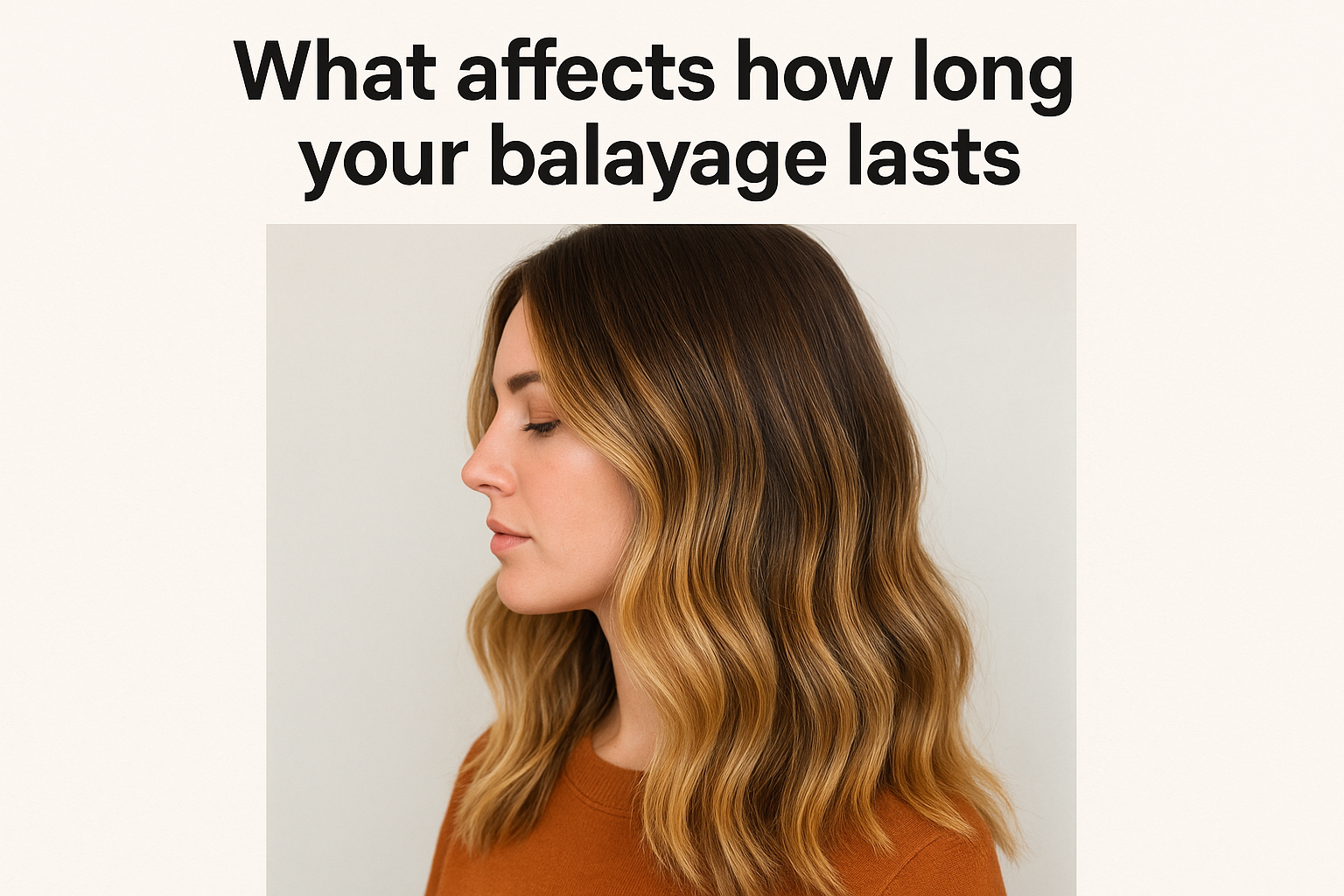
Darker natural hair needs more lightening to reach a balayage-ready base, which opens the cuticle further and shortens how long the tone sits before warmth resurfaces. Fine or previously coloured hair tends to be more porous already, so it grabs toner unevenly and loses it faster too.
Technique and placement
A soft, low-contrast balayage with fine, feathered sections grows out far more subtly than a bold, high-contrast placement, which means it can go longer between appointments without looking patchy. Heavier, chunkier sections show regrowth and fade sooner simply because there's more visual contrast to notice.
The softer the placement, the longer you can wait before anyone notices it's time for a refresh.
Environment and lifestyle
Hard water, chlorinated pools, and strong summer sun all pull colour out faster than gentle indoor conditions do. Someone who swims weekly or lives somewhere with hard tap water will typically need a touch-up sooner than someone who doesn't.
| Factor | Effect on longevity |
|---|---|
| Dark natural base | Faster fade, more warmth |
| Low-contrast placement | Longer between refreshes |
| Hard water or chlorine | Strips tone quickly |
| Frequent heat styling | Dulls and dries colour faster |
Knowing where you sit on each of these points gives you a realistic personal timeline rather than a generic average.
When to book a toner touch-up or a full refresh
Knowing the difference between a quick toner top-up and a full balayage appointment saves you both money and time in the chair. Not every sign of fading means starting from scratch, and booking the wrong service is a common mistake among people managing balayage upkeep for the first time.
Signs you only need a toner refresh
If your lightened sections still look bright but the tone has turned brassy or yellow, that's a toner problem, not a lightening one. A quick gloss or toner-only visit, usually 30 to 45 minutes, resets the colour without touching your regrowth. You'll typically need this every four to six weeks if you're blonde or ash-toned.
- Ends look warm or golden but roots are untouched
- Overall colour looks dull rather than patchy
- No visible line where lightened hair meets natural regrowth
If the shape still looks right and only the tone has shifted, you need a toner, not a full colour service.
Signs you need a full refresh
A full refresh becomes necessary once the regrowth line starts showing through, usually around week ten to twelve, or when previous lightened sections have grown noticeably longer than fresh placement would look natural. This visit involves re-lightening new growth and blending it into existing colour, so it takes longer and costs more than a toner-only appointment.
| Situation | Book this |
|---|---|
| Warmth or brassiness only | Toner refresh |
| Visible regrowth line | Full balayage refresh |
| Patchy or uneven lightening | Full balayage refresh |
Booking early, before the contrast becomes obvious, keeps the whole look softer and easier to maintain long-term.
Keeping your balayage looking salon-fresh
Balayage rewards patience more than perfection. Most people get 8 to 12 weeks before a full refresh, and that window stretches noticeably once you wash smarter, tone regularly, and treat lightened hair as the porous, thirsty thing it actually is. The fade itself isn't a flaw in your colour, it's just chemistry meeting daily life, and now you know exactly what's driving it.
Getting the timeline right means fewer rushed salon visits and more control over how your colour looks between them. Small habits, cooler washes, a weekly mask, the right toning shampoo, do more heavy lifting than people expect.
If brassiness is creeping back in before your next appointment, don't wait it out. Our lighten and tone system is built to lift gently and correct warmth at home, keeping your balayage looking freshly done for weeks longer without another trip to the chair.