
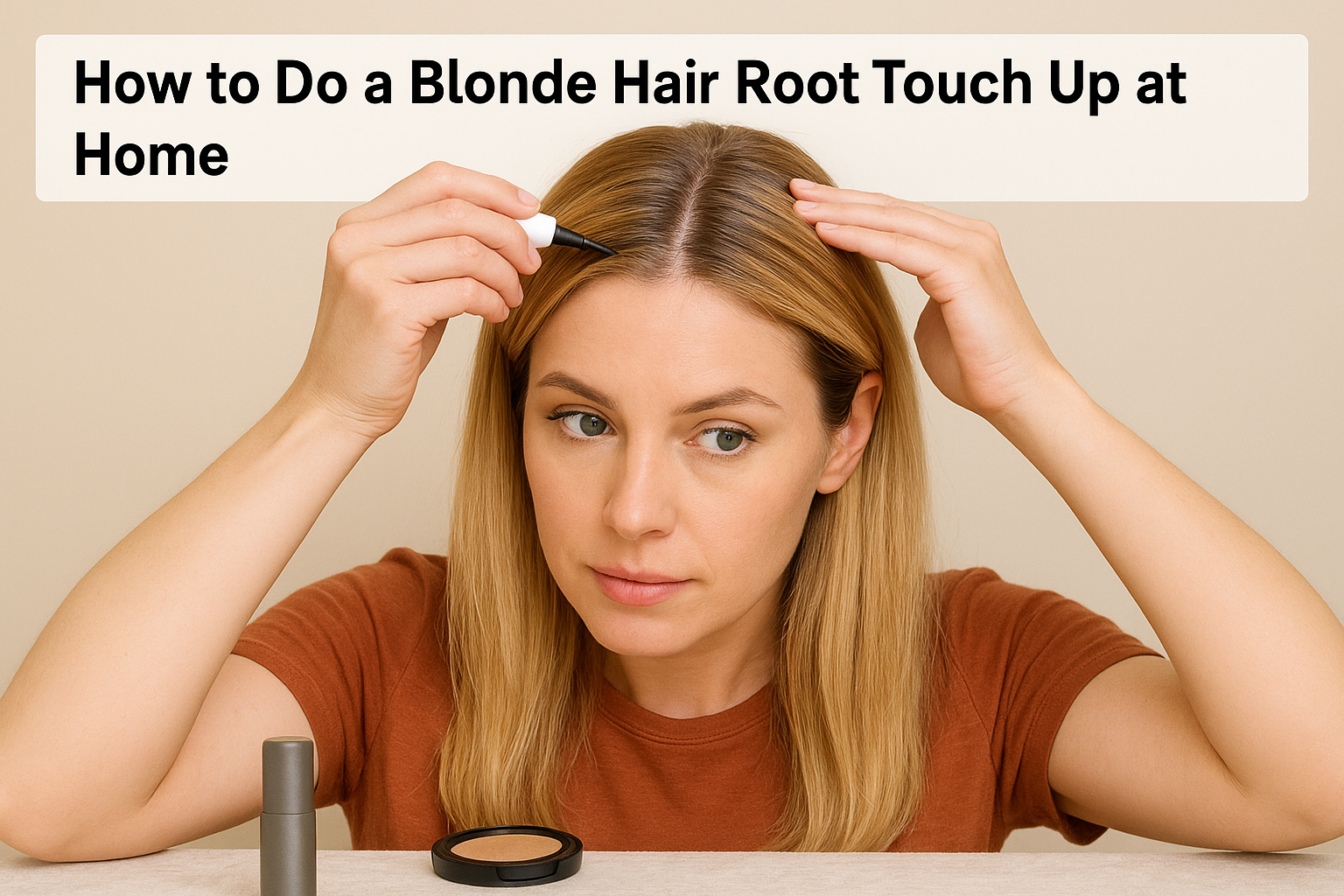
How to Do a Blonde Hair Root Touch Up at Home
Dark roots creeping through your blonde can undo weeks of careful upkeep in a matter of days. Blonde shows regrowth faster than almost any other shade, which is why so many of us end up searching for a blonde hair root touch up the moment that line appears at the parting. The good news is you don't need a salon chair or a three-hour appointment to sort it out.
This guide gets straight to the point: how to blend your regrowth at home so it looks seamless, not patchy. We'll walk through when a root touch up spray or powder is enough to buy you time, and when you actually need a proper root touch up blonde dye for lasting, even colour. You'll also learn how to match your existing tone rather than guessing and ending up brassy or too pale.
Whether you're maintaining a salon blonde or managing your own full head colour, we'll cover the products, application steps, and aftercare that keep hair looking healthy rather than damaged between colours, using plex-enriched, ammonia-free formulas designed for exactly this job.
Understanding your blonde before you start
Blonde isn't one colour, it's a whole family of tones, and that's exactly why so many home touch-ups go wrong. Before you reach for any product, take a proper look at your hair in daylight, not under bathroom spotlights that flatten every undertone into the same flat yellow. Bleached blonde, natural blonde, and toned salon blonde all fade and regrow differently, so what worked for your friend's root touch up might leave you brassy or ashy grey if you skip this step.
Work out your base level and undertone
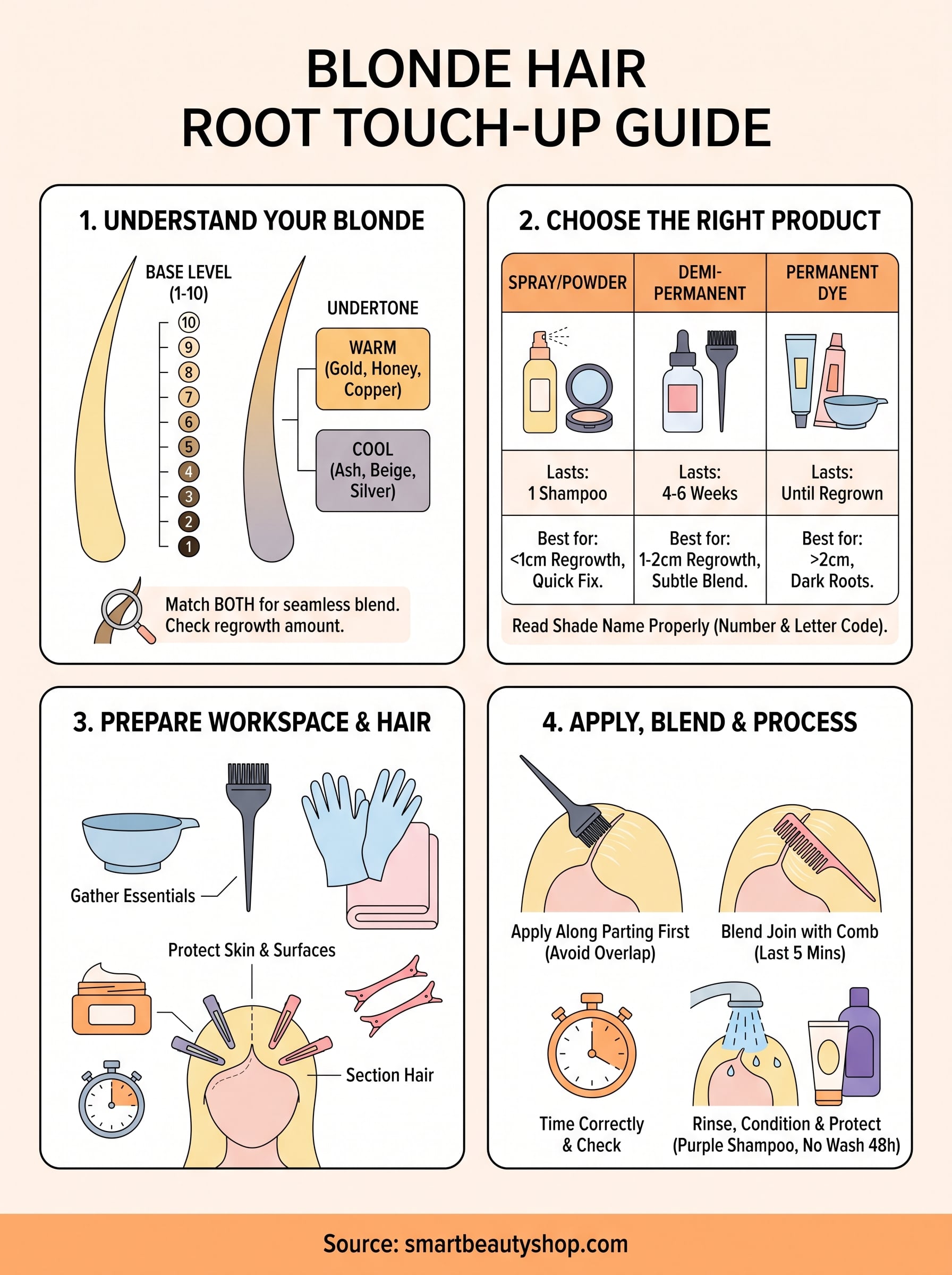
Every blonde shade sits on a numbered scale, usually from 1 (black) to 10 (lightest blonde), and your roots will almost always be a level or two darker than your ends. Undertone matters just as much as level: warm blondes lean gold, honey or copper, while cool blondes lean ash, beige or silver. Matching level without matching undertone is the single biggest reason root touch up blonde attempts end up patchy.
| Level | Typical shade name | Undertone family |
|---|---|---|
| 10 | Lightest blonde | Ash, platinum |
| 9 | Very light blonde | Beige, ash |
| 8 | Light blonde | Golden, honey |
| 7 | Medium blonde | Golden, copper |
| 6 | Dark blonde | Warm, natural |
Match the undertone, not just the level, and your roots will disappear into your blonde instead of sitting on top of it.
Check how much regrowth you're actually dealing with
How far your roots have grown out decides which product category you should even be shopping in. A light dusting of regrowth calls for something completely different to two months of neglect, and using the wrong tool for the job is how people end up with a stripe of colour that doesn't blend.
- Under 1cm of regrowth: a root touch up spray or powder will usually disguise it for a few days, perfect for events or photos.
- 1 to 2cm of regrowth: a temporary root concealer works for a day, but a demi-permanent touch-up gives you a few weeks of proper coverage.
- Over 2cm, or roots noticeably darker than the rest: you need a permanent or semi-permanent dye matched to your existing shade for even, lasting results.
Know your hair's history
Previously bleached or highlighted hair behaves differently to virgin regrowth. It's more porous, grabs colour faster, and can end up darker or brassier than you expect if you leave a permanent formula on for the full time stated on the box. If you've coloured at home before with mixed results, or you're not sure what was used last time, do a strand test on a small section first. It takes ten minutes and saves you from a full-head surprise you'll be wearing for weeks.
Step 1. Match your shade and choose your product
Once you know your level, undertone and how much regrowth you're covering, the next job is choosing the right formula. Getting this wrong is the most common reason a blonde hair root touch up looks obviously different from the rest of your hair, even when the shade name sounds close enough on the box.
Choose the right product type for the job
Products fall into three broad categories, and each suits a different situation. A root touch up spray or powder sits on the surface of the hair and washes out with your next shampoo, which makes it ideal for a quick fix before an event. Demi-permanent dye deposits colour without lifting, lasting several weeks and fading gradually rather than leaving a hard line. Permanent dye is the only option that properly lightens or covers stubborn regrowth for months.
| Product type | Lasts | Best for |
|---|---|---|
| Spray or powder | 1 shampoo | Under 1cm regrowth, events |
| Demi-permanent | 4 to 6 weeks | 1 to 2cm regrowth, subtle blending |
| Permanent dye | Until regrown | Over 2cm, noticeable dark roots |
Choosing the wrong product type causes more patchy roots than choosing the wrong shade ever does.
Read the shade name properly before buying
Shade names can be misleading if you don't check the number and letter code alongside them. Look for a root touch up blonde shade that matches both your base level and undertone table from earlier, not just a flattering photo on the packaging. Vegan, ammonia-free formulas with plex technology are worth prioritising here too, since they protect the very ends that previous colouring has already weakened. If you're torn between two shades, go slightly lighter rather than darker. Lifting a touch-up shade later is far easier than trying to correct roots that have gone too dark against lightened lengths.
Step 2. Prepare your hair and workspace
Good prep is what separates a clean, salon-look blonde hair root touch up from a patchy mess that stains your bathroom tiles. Sort your space and your hair before you mix a single drop of product, because once you start applying colour, you won't have time to hunt for a missing tint brush or a towel you don't mind ruining.
Gather everything before you mix anything
Getting organised first means you won't rush the application once the clock starts running on processing time. Lay everything out on a towel within easy reach.
- Root touch up dye, spray or powder, plus developer if required
- Mixing bowl and brush, or the applicator that comes with your kit
- Tint brush with a fine tip for precise root touch up blonde application along the parting
- Old towel, an old top you don't mind staining, and disposable gloves
- Vaseline or barrier cream for your hairline and ears
- Sectioning clips and a wide-tooth comb
- Timer on your phone
Protect your skin, clothes and surfaces
Before you touch a single strand, smear a thin line of barrier cream along your hairline, ears and neck to stop the dye staining your skin. Cover any surface you're working near, since even a small splash of permanent dye can mark grout or worktops permanently. Wearing an old top matters more than it sounds, because sleeves brush against wet dye constantly during application.
A ten-minute prep job saves hours of scrubbing dye stains off your skin and bathroom later.
Section your hair for accurate application
Divide your hair into four sections, working from the centre parting back to each ear, and clip each one out of the way. Working in sections stops you missing patches of regrowth or accidentally overlapping colour onto lengths that don't need it. Comb through each section once more to check you can clearly see the demarcation line where your natural growth starts.
Step 3. Apply the touch-up to your roots
With your workspace sorted and your hair sectioned, it's time to actually apply the colour. This is the stage where precision matters more than speed, since a rushed root touch up blonde application is exactly what leaves harsh lines or missed patches once your hair dries.
Mix only what the instructions state
Measure your dye and developer exactly as the box directs rather than eyeballing it, because too much developer can lift your roots lighter than the rest of your hair, while too little leaves patchy, uneven coverage. Mix just before you apply, since most formulas start working the moment they combine and lose effectiveness if left sitting in the bowl.
Apply along the parting first
Start at your central parting, where regrowth is usually most obvious, then work outward through each section you clipped earlier.
- Take a small subsection no wider than your tint brush.
- Apply colour directly to the root line, keeping roughly 1cm away from previously coloured lengths to avoid overlap and damage.
- Work through each section methodically, checking you've covered every visible line of regrowth.
- Use the tail of your brush to lift sections and check underneath, since roots at the crown and nape are easy to miss.
Overlapping fresh dye onto already-coloured hair is the single biggest cause of damage during a root touch up.
Uneven application is far more noticeable on blonde than on darker shades, since there's nowhere for a missed patch to hide. Take your time here rather than rushing to the timer, because a few extra minutes of careful application saves you from redoing the whole process next week.
Once every section is covered, gently massage the product through with gloved hands to ensure full saturation, particularly at the hairline and behind the ears where hair often grows in a different direction. Check your mirror from multiple angles before you start timing, since this is your last chance to catch anything missed before processing begins.
Step 4. Blend, process and finish for a seamless look
Processing time is where patience pays off, and rushing this stage undoes all the careful work you put into your blonde hair root touch up. Set your timer to the exact minutes stated on your product, not a guess based on how your hair looked last time, since developer strength and porosity both affect how quickly colour develops.
Time it correctly and check as you go
Check a small section around the halfway point by wiping away a bit of product with a damp cotton pad to see how the colour is developing against your existing blonde. If your roots are lifting faster than expected, because previously bleached hair often processes quicker than virgin regrowth, you may need to rinse a few minutes early. Never leave a permanent or demi-permanent formula on longer than the maximum time stated, even if you're worried the colour hasn't taken.
Checking your colour halfway through processing catches problems while you can still fix them, not after they've set.
Blend the join with a comb-through
Once your roots have processed, comb a small amount of the remaining mixture through the mid-lengths and ends for the last five minutes only. This step is what makes a root touch up blonde application look grown-out rather than banded, since it softens the line between fresh colour and existing tone without over-processing hair that's already been coloured before.
Rinse, condition and protect the result
Rinse with cool water until it runs completely clear, then follow with the conditioner included in your kit, since it helps close the hair cuticle and lock in tone. Avoid washing again for at least 48 hours to let the colour settle fully. Finish with a purple or toning shampoo once or twice a week afterwards to keep brassiness at bay and stretch the vibrancy of your fresh roots for as long as possible.
Keeping your blonde looking fresh between salon visits
Getting your blonde hair root touch up right at home comes down to matching your shade properly, prepping thoroughly, and never rushing the application or processing stages. Skip any of those steps and you'll end up with the exact patchiness you were trying to avoid, no matter how good the product is.
Between touch-ups, protect your investment with sulphate-free shampoo, weekly toning treatments, and heat protection, since faded or brassy lengths make even a perfect root blend look mismatched. Keep a spray or powder on hand for the days when regrowth appears before you've got time for a full application, and always do a strand test if you've changed products or it's been a while since your last colour.
If you're ready to lift your base or refine your tone properly rather than just patching regrowth, browse Smart Beauty's lighten and tone system for gentle, plex-enriched formulas built for exactly this job.