
How Long Does Hair Colour Last? Timeline By Dye Type
You've just picked a shade, or you're eyeing one up, and the question that actually matters is how long does hair colour last before you're back to square one. It's a fair question, because the answer changes everything from which product you buy to how you plan your next salon-free weekend. The honest truth is there's no single answer, it depends entirely on the dye type you choose and how you treat your hair afterwards.
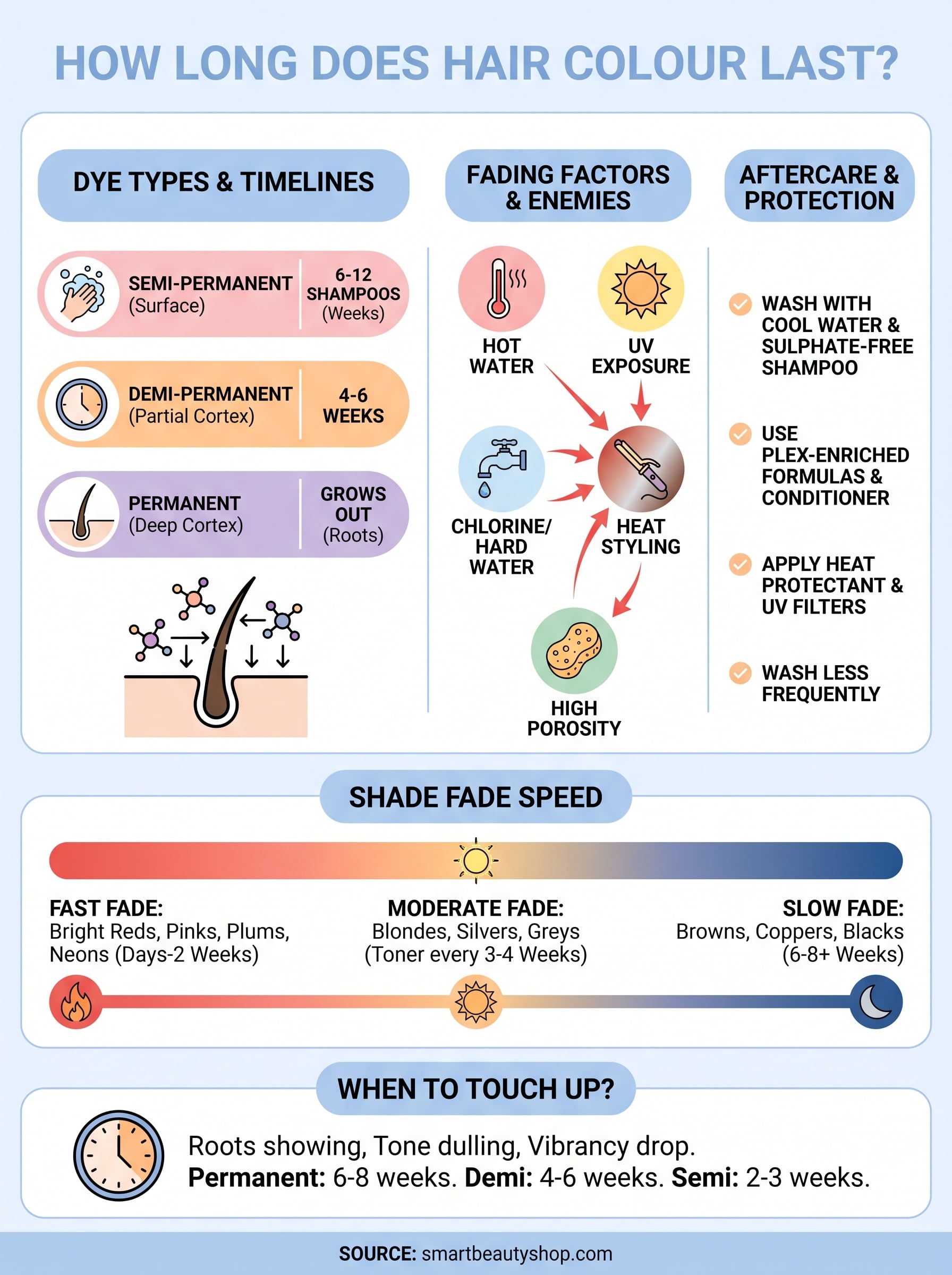
Semi-permanent colour typically washes out within 6 to 12 shampoos, demi-permanent holds on for 4 to 6 weeks, and permanent colour grows out rather than fades, lasting until your roots need retouching. But washing frequency, water temperature, and sun exposure all speed up or slow down that clock considerably.
Below, we break down the realistic timeline for each dye type, explain the factors that make colour fade faster or slower, and share how choosing a plex-enriched formula can help your results stay vibrant for longer between colouring sessions.
Why does hair colour fade over time?
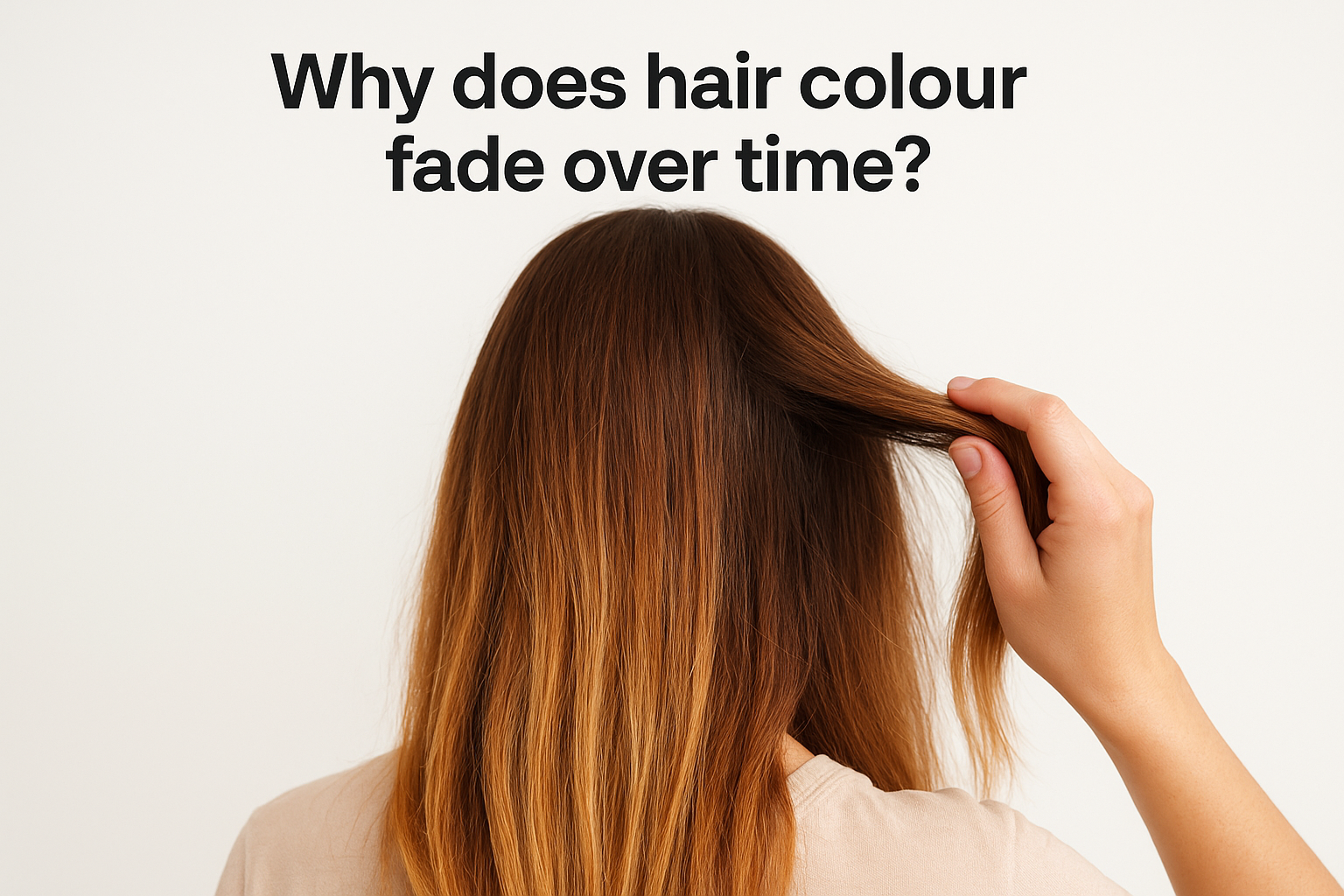
Hair colour fades because of what's actually happening inside the hair shaft, not just what's happening on the surface. Your hair is made up of a tough outer layer called the cuticle and an inner layer called the cortex, where colour molecules actually live once they've been deposited. Permanent and demi-permanent dyes work by opening the cuticle and depositing colour molecules deep inside the cortex, while semi-permanent formulas simply coat the outside of the hair shaft. That structural difference is the entire reason semi-permanent shades rinse out in a couple of weeks while permanent colour sticks around until new growth pushes it out.
How molecule size determines longevity
Smaller molecules penetrate further and bond more securely, which is why permanent colour uses an oxidative process to shrink and lock pigment inside the cortex. Semi-permanent dyes use larger pigment molecules that can't fit through the cuticle, so they sit on top and wash away with every shampoo. Demi-permanent sits in between, using a low-level developer or none at all to get partway into the cortex without the same permanence. This is also why box dye and salon colour can behave so differently even when the shade name looks identical, the molecule size and the developer strength both affect how long the result holds.
Colour fades fastest where it sits shallowest, and lasts longest where it's chemically locked inside the hair.
The everyday habits that speed up fading
Washing is the biggest daily factor, because every rinse opens the cuticle slightly and lets a small amount of pigment escape, especially with hot water. Heat styling adds to this by drying out the cuticle edges so they lift more easily, letting colour molecules slip out faster than they would on hair left to air-dry. Sun exposure breaks down pigment through UV oxidation in the same way it fades fabric left on a washing line, and chlorine or hard water minerals can bind to the hair shaft and pull colour with them.
| Factor | Effect on colour longevity |
|---|---|
| Hot water washing | Opens cuticle, speeds pigment loss |
| UV/sun exposure | Oxidises and breaks down pigment molecules |
| Chlorine or hard water | Binds to hair shaft, strips colour |
| Heat styling tools | Lifts cuticle edges, lets colour escape |
| High porosity hair | Absorbs and releases colour faster |
Porosity and colour history matter too
Porosity is how easily your hair absorbs and releases moisture and pigment, and it's shaped by genetics, previous chemical treatments, and general damage. Highly porous hair, often the result of previous bleaching or perming, takes colour quickly but also loses it quickly because the cuticle sits raised rather than flat. Low porosity hair holds colour more stubbornly but can also take longer to process during application. Repeated colouring compounds this, because each cycle of opening and closing the cuticle leaves it slightly rougher than before, which is one reason plex-enriched formulas matter so much for anyone colouring at home regularly. They work by rebuilding some of the internal bonds broken during the colouring process, which helps the cuticle sit flatter afterwards and slows down how quickly the next batch of colour escapes. Understanding this is genuinely useful when you're deciding how long hair colour last results will realistically hold for your specific hair type, because two people using the identical product can see very different fade times based purely on porosity and prior colouring history.
How to make your hair colour last longer
Once you know why colour fades, protecting it becomes a lot simpler. Most of the damage happens through everyday habits you can adjust without much effort, and the right aftercare routine can genuinely double how long a shade stays vibrant. Getting this right matters more with home colouring, because you don't have a stylist reminding you to switch shampoos or skip the hot shower.
Wash smarter, not less
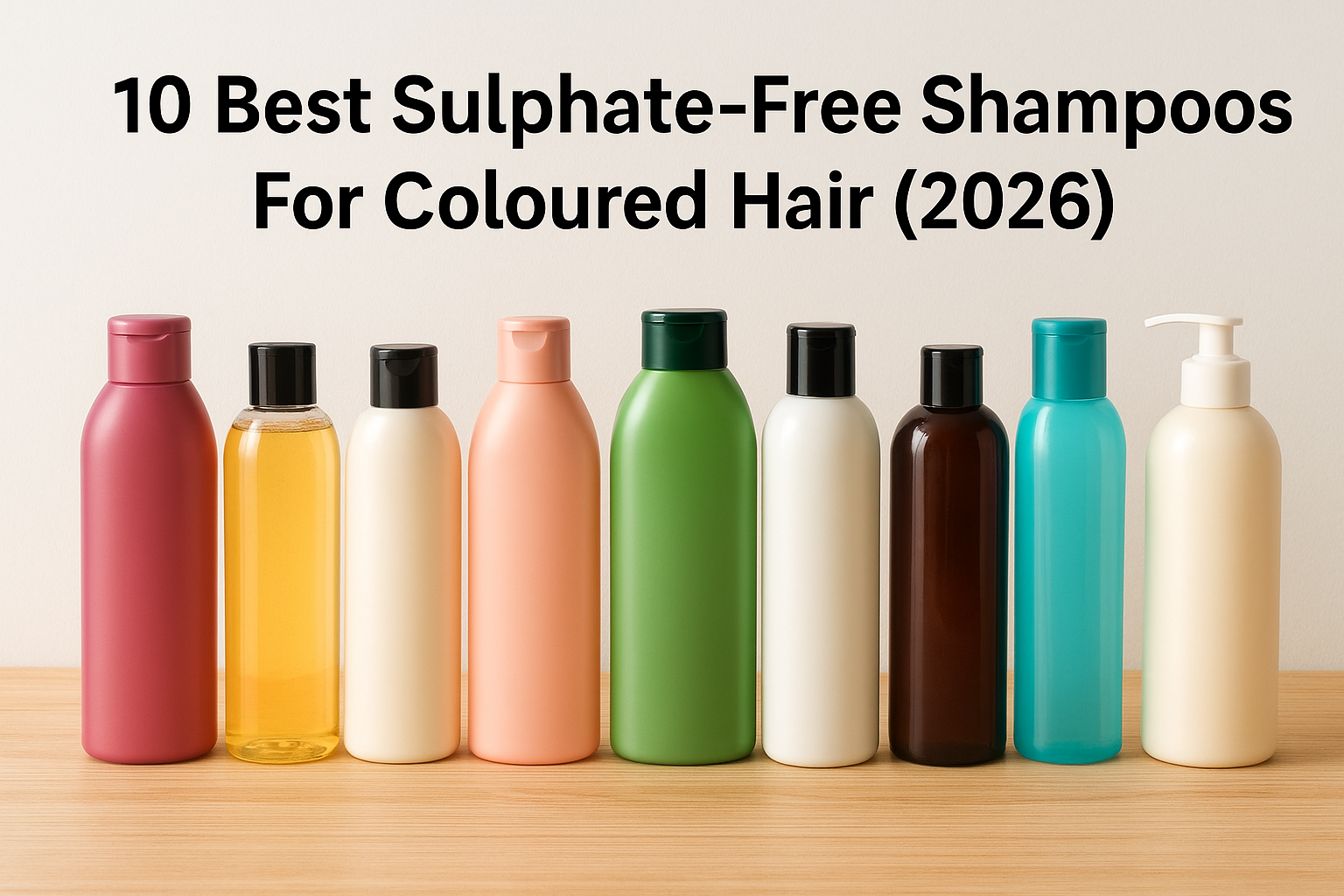
Cold or lukewarm water keeps the cuticle flatter than hot water, so pigment has less chance to escape with every rinse. Switching to a sulphate-free shampoo stops the harsh stripping effect that ordinary shampoos have on colour molecules sitting in the cortex. Washing every other day rather than daily also cuts down the total number of times the cuticle gets disturbed each week.
Every degree cooler and every wash skipped buys your colour a little more time.
Build a simple aftercare routine
A few consistent habits do more for colour retention than any single expensive product. Try building this into your weekly routine:
- Wash with cool water and a sulphate-free, colour-safe shampoo
- Apply a colour-protecting conditioner or mask once or twice a week
- Use a leave-in treatment with UV filters before heading outdoors
- Turn heat styling tools down below 180°C, or let hair air-dry when you can
- Wear a swim cap or rinse hair with fresh water before entering chlorinated pools
Choose formulas built to last
The product you start with matters just as much as how you care for it afterwards. Plex-enriched dyes rebuild some of the internal bonds broken during colouring, which means the cuticle sits flatter once you rinse and less pigment escapes in the following weeks. Pairing this with a colour refresher between full applications keeps tone looking fresh without exposing hair to another full chemical process. Choosing vegan, PPD-free, and ammonia-free formulas also tends to be gentler on the hair shaft overall, which supports longevity rather than working against it.
Protect colour from styling heat
Heat protectant spray isn't optional if you're colouring at home and still reaching for straighteners or curling tongs regularly. A light mist before styling creates a barrier that reduces how much the cuticle lifts under heat, keeping more colour locked inside the cortex where it belongs.
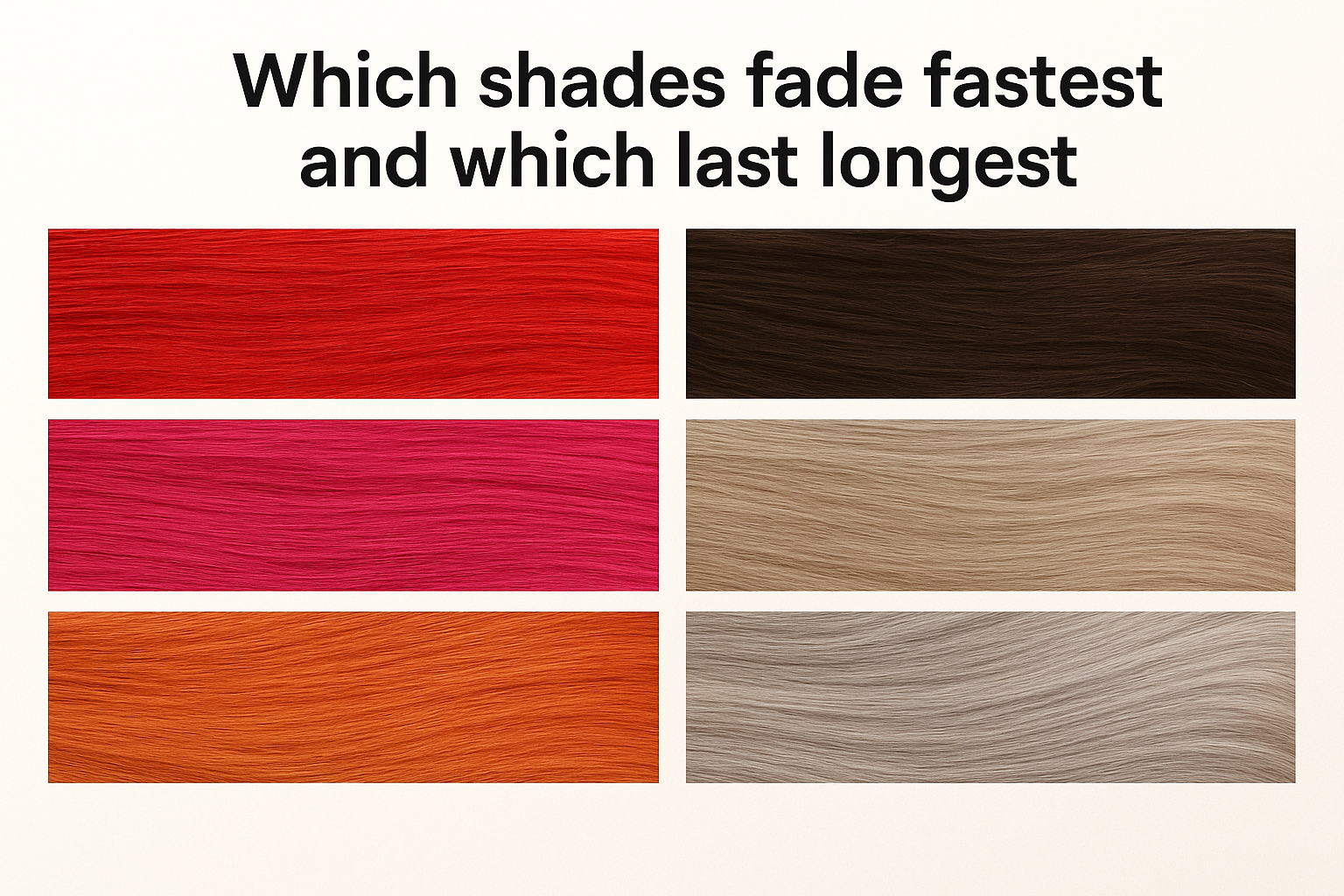
Which shades fade fastest and which last longest
Shade choice affects your fading timeline just as much as dye type does, because pigment molecules aren't all the same size or stability. Warm reds and vivid brights sit at one end of the spectrum, fading noticeably within days, while cooler, deeper tones can hold their depth for weeks. If you're trying to work out how long hair colour last results will genuinely stay true to the swatch, the colour family you pick matters as much as the formula strength.
Bold and bright tones fade first
Red pigment molecules are physically larger than most other colours, which makes them harder to lock deep inside the cortex, so they wash out faster no matter how careful your aftercare routine is. Pastel and neon shades face the same issue, since they're built from dye molecules designed to sit closer to the surface for that vivid finish. Pink, plum, and bright copper tones typically need a refresher gloss every 2 to 3 weeks to stay looking fresh rather than washed out.
The brighter and warmer the shade, the shorter its realistic lifespan between top-ups.
Cool and natural tones last longest
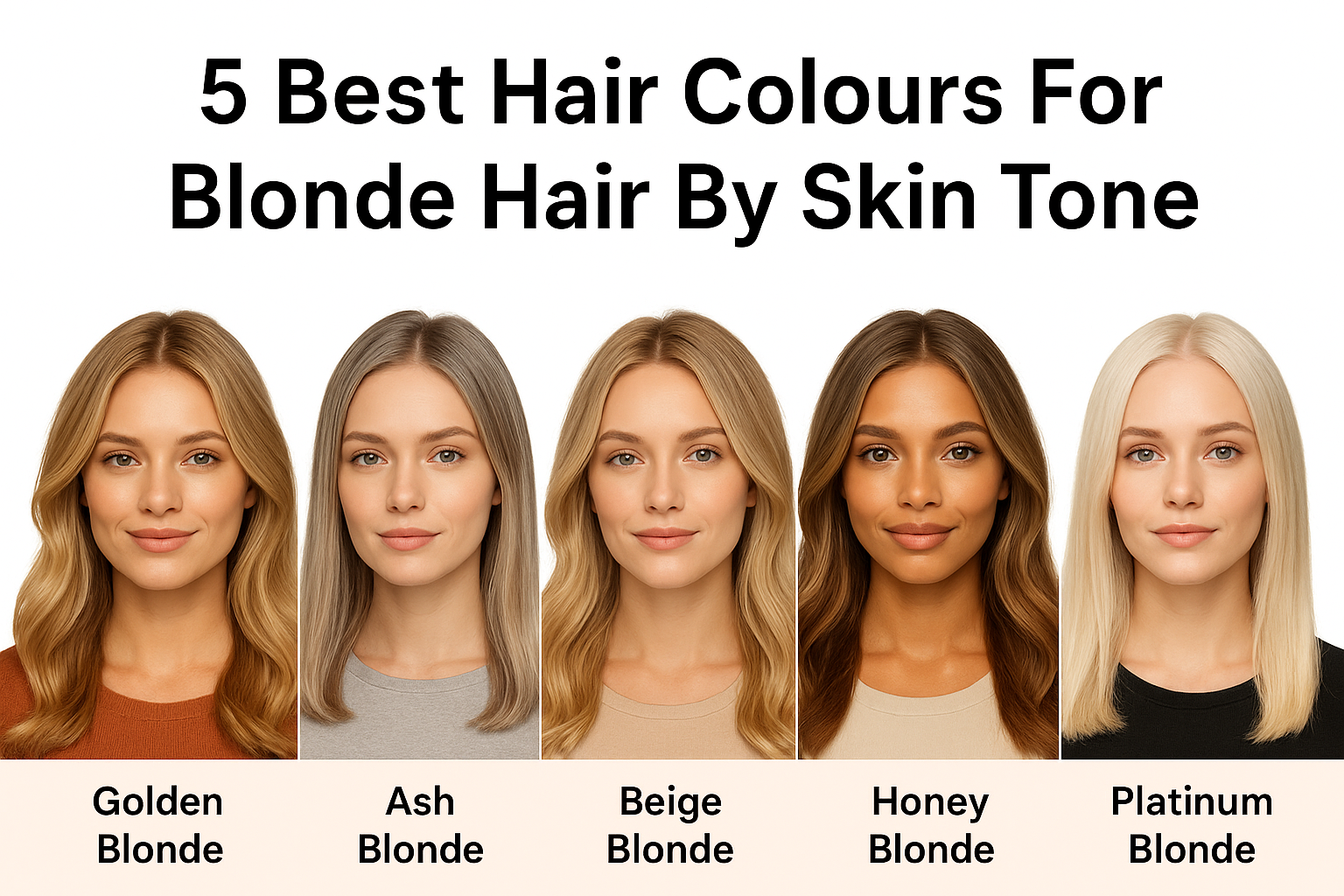
Brunettes, ash blondes, and deep browns hold their colour considerably longer because the pigment molecules used tend to be smaller and more stable within the cortex. Silver and grey tones are the exception here, since the lack of warm undertones means any fading shows up as brassiness fairly quickly, even though the base colour itself doesn't wash out fast.
| Shade family | Typical fade speed | Refresh guidance |
|---|---|---|
| Bright pink/plum/red | Fast, days to 2 weeks | Gloss every 2-3 weeks |
| Bleach/blonde | Moderate, brassiness shows fast | Toner every 3-4 weeks |
| Silver/grey | Moderate, tone shift visible early | Purple shampoo weekly |
| Brown/copper | Slow, holds depth well | Refresh every 6-8 weeks |
| Black/blue | Slowest, deep pigment locks in | Refresh every 8+ weeks |
Bleached and blonde shades sit in the middle of this table because the underlying lift makes hair more porous, so toner fades faster even though the lightening itself is permanent. Choosing a plex-enriched formula for these lighter shades helps close that porosity gap and keeps the cool tone looking clean for longer between salon-free refreshes.
When to book your next touch-up
Knowing when to top up your colour saves you from either wasting product on hair that's still vibrant or walking around with two inches of obvious regrowth. The right timing depends on your dye type, your natural hair colour, and how fast your roots grow, which averages around 1.25cm a month for most people. Working out how long hair colour last results will genuinely hold before they need attention means watching for a few specific signs rather than sticking to a rigid calendar date.
Reading the signs your roots are showing
Regrowth becomes visible faster with permanent colour that's several shades away from your natural base, since the contrast line shows up quicker than with subtle shade shifts. If you've gone lighter, dark roots against pale ends create an obvious demarcation within 3 to 4 weeks. Going darker or closer to your natural shade buys you more time, often 6 to 8 weeks, because the line blends rather than clashes.
A touch-up scheduled by root length lasts longer than one scheduled by the calendar.
A realistic touch-up schedule by dye type
Use this as a rough guide rather than a fixed rule, since porosity and aftercare shift these windows in either direction:
- Semi-permanent colour: refresh every 2 to 3 weeks, or as soon as vibrancy noticeably drops
- Demi-permanent colour: touch up every 4 to 6 weeks, before tone turns dull or brassy
- Permanent colour: retouch roots every 6 to 8 weeks, adjusting for how fast your hair grows
- Bleached or lightened hair: tone every 3 to 4 weeks to keep brassiness under control
Vibrancy dropping off, tone turning muddy, or roots creating a sharp line are all better cues than counting weeks on a calendar. Watching your hair's actual condition, rather than a fixed date, means you're colouring when it genuinely needs it rather than when a schedule says so. Sensitive scalps benefit from this approach too, since spacing out applications based on need rather than habit reduces unnecessary exposure to developer and dye. If you're unsure which shade or formula suits your regrowth pattern, browsing Smart Beauty's collections by natural hair tone makes it easier to pick a match that grows out gracefully rather than obviously.
Getting the most from every colour
So, how long does hair colour last? It genuinely comes down to the choice you make at the shelf and the habits you build afterwards. Semi-permanent shades give you weeks, demi-permanent gives you a month or so, and permanent colour grows out rather than fades away. Cooler water, sulphate-free shampoo, and a plex-enriched formula can stretch any of these timelines further than you'd expect, whichever dye type you've settled on.
Once you know the pattern, colouring at home stops feeling like guesswork and starts feeling like something you can plan around confidently. Roots, brassiness, and dulling tone all become signals rather than surprises. If you're ready to try a formula built to hold its colour longer between touch-ups, browse Smart Beauty's Cover & Care System for rich, long-lasting coverage that looks after your hair while it looks after your colour.